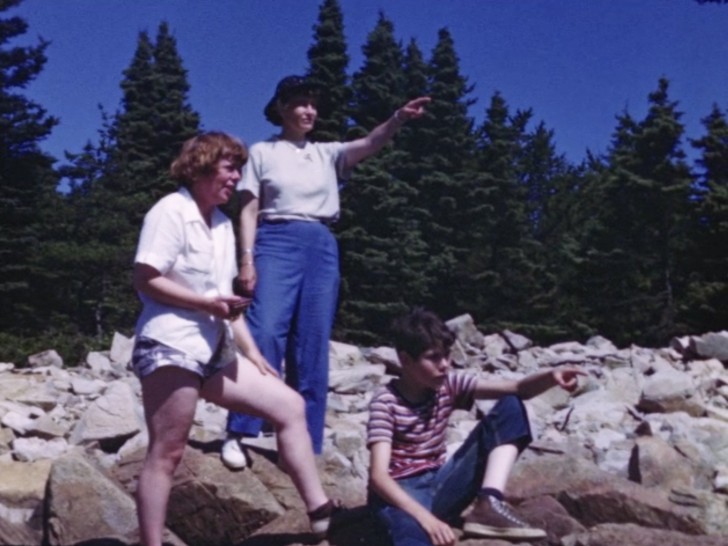
For over a decade and a half, Lesbian Home Movie Project (LHMP) has sought, digitized, documented and preserved amateur analog footage mainly shot by lesbians and depicting lesbian lives. Late film historian Patricia Zimmerman, author of Reel Families: A Social History of Amateur Film (Indiana University Press, 1995) praised the project as "a highly original reformulation of amateur film in all its heterogeneities" and "an intervention into the positioning of amateur film as part of the psychic visual imaginaries of the heterosexual nuclear family." Presently, the collection consists of nearly 600 films and videos.
LHMP's earliest collection to date is that of high school English teacher Ruth Storm (1888-1981). Subsequent filmmakers and videographers in the archive include artists, librarians, gardeners, nurses, therapists, engineers, teachers, coaches, writers and organizers as well as budding professional moving image makers. Footage begins in the periods of romantic friendships and Boston marriages and goes on to capture house parties, police raids, lavender scares and marriages, bar scenes, lesbian lands, turkey-baster and IVF pregnancies, custody fights and arrangements, and lesbian marriage ceremonies and honeymoons. There are poetry readings, variety shows, music festivals, holiday cruises, hikes and paddles, square, line and ballroom dances, weekend softball games and international Gay Games. Lesbians kiss and cavort, build homes and settle lands, play and hang out, break up, perform and make art, race and parade, demonstrate and protest. Among significant protests documented are the 1930s Chinatown Boycott; 1963 March on Washington; 1960 civil rights demonstrations; 41-day 1993 Florida Peace Walk; 1983 Seneca Falls Women's Encampment for a Future of Peace and Justice; and the Colorado LGBTQ movement against “Prop 2.” Comprising home movies, documentaries and fictional narratives, the footage documents lesbian lives in all corners of the United States as well as Australia, England and Europe.
Celebrated figures who appear in the collection include fastball player Joan Joyce, painter Marsden Hartley, writers Audre Lorde and May Sarton, musicians Holly Near, Ronnie Gilbert and Alix Dobkin, spiritual teacher Ram Das, and civil rights and feminist activists Blue (Doris) Lunden, Jane Gapen and Theresa Carr. The collection also includes home movies shot by professional moving image makers, such as Barbara Jabaily, Francis Lee, Michelle Citron and Meema Spadola.
As a hallmark of its practice, the project strives to contact participants to collect supporting permissions and documentation. It makes every effort to respect participant and maker concerns, leading Dagmar Brunow, Professor of Film Studies at Sweden's Linnaeus University, to praise its exceptional "ethics of care."
- Enlarge the image
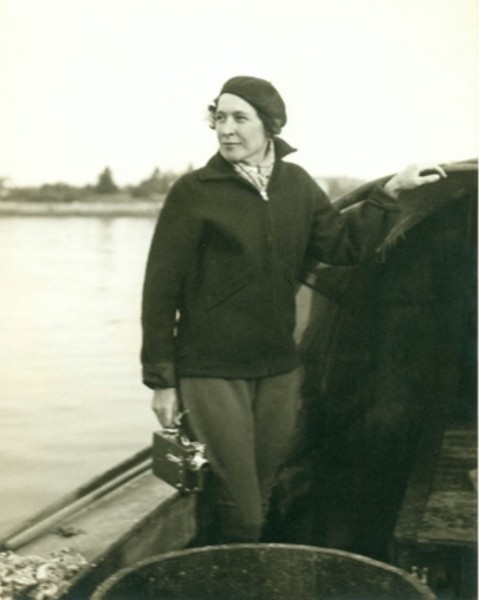
Ruth Huntington Storm (1888-1981) with her Cine Kodak Model K - Enlarge the image
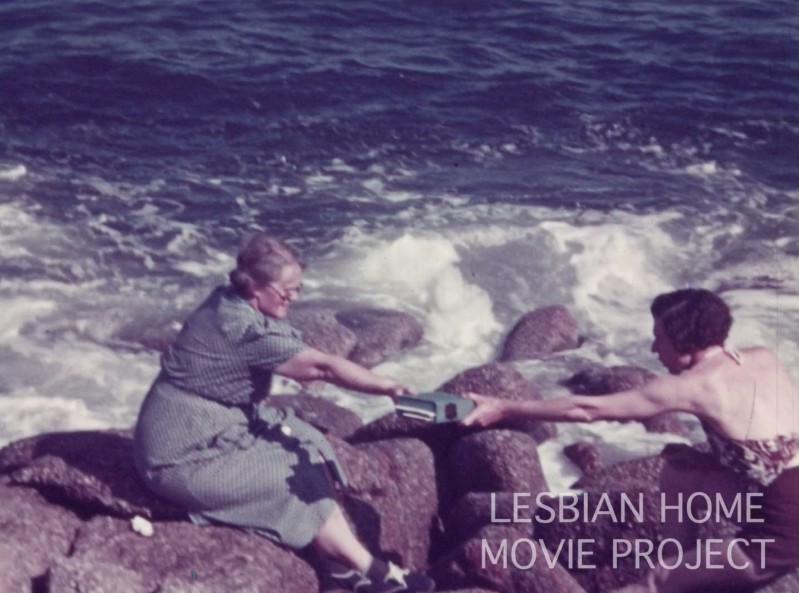
Ruth Huntington Storm reel, 1940s - Enlarge the image
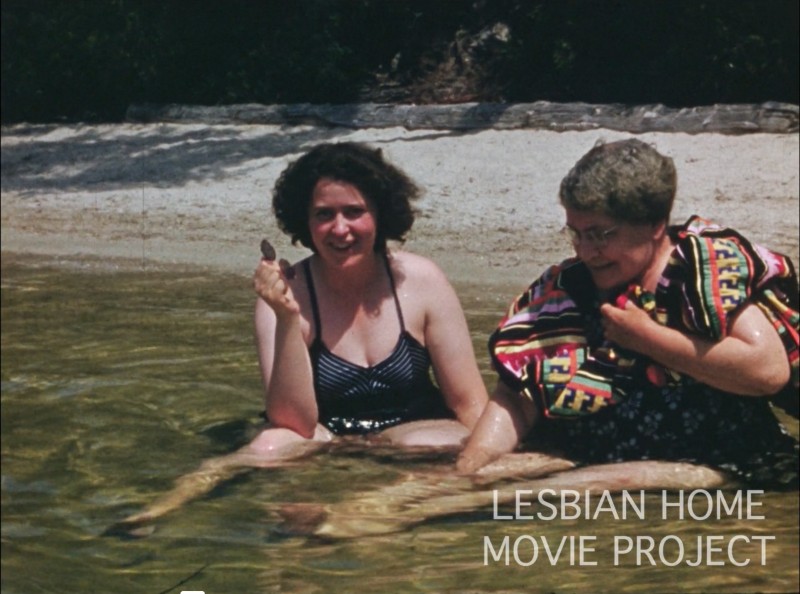
Ruth Huntington Storm reel, 1940s - Enlarge the image
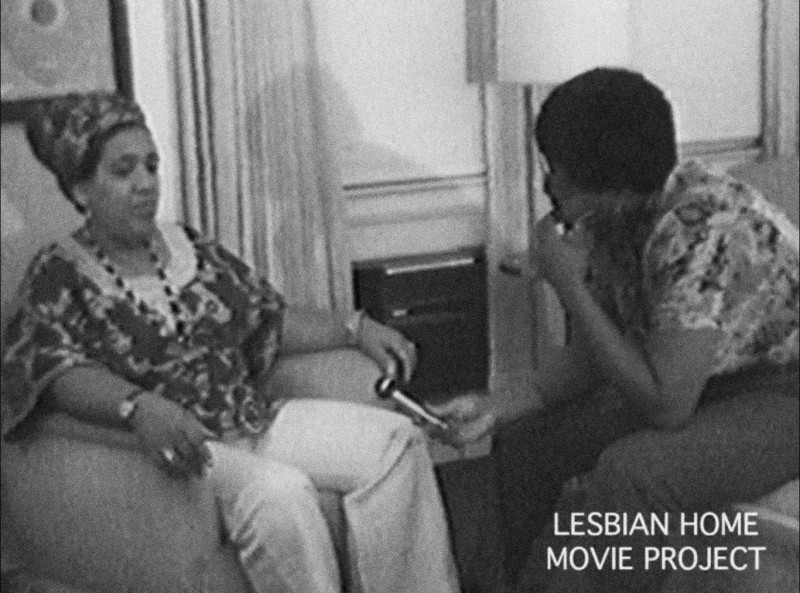
Poet Audre Lorde interviewed by Mary Lu Lewis, filmmaker Michelle Citron, 1975 - Enlarge the image
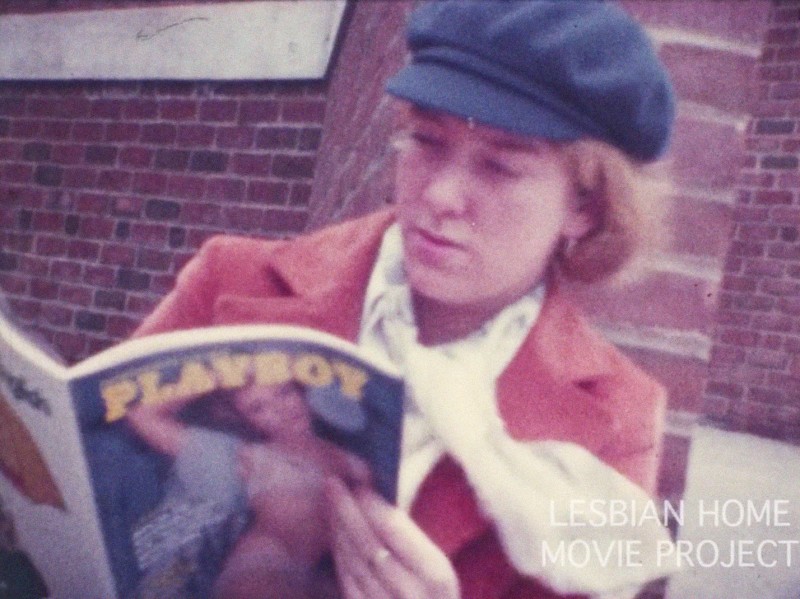
FLAVIA (1972) by Janet Prolman - Enlarge the image
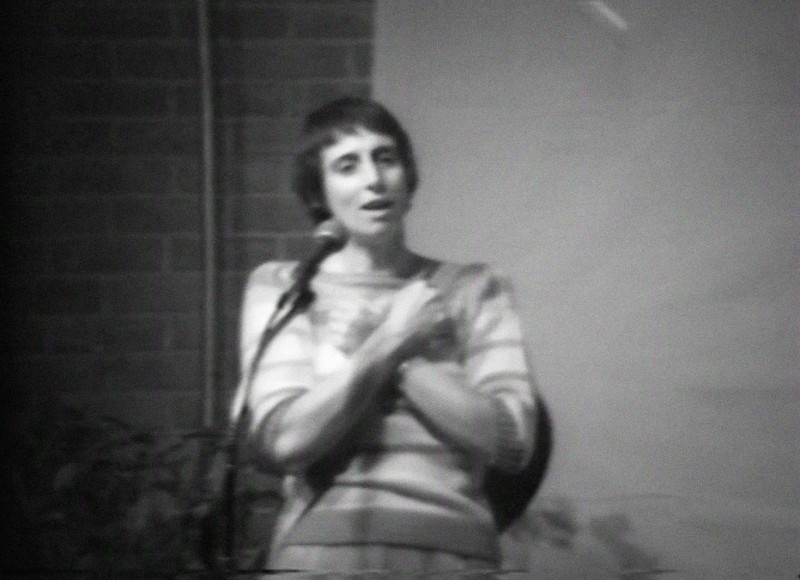
Alix Dobkin singing and signing "If It Wasn't for the Women," 1982, by the Aradia womyn’s community - Enlarge the image
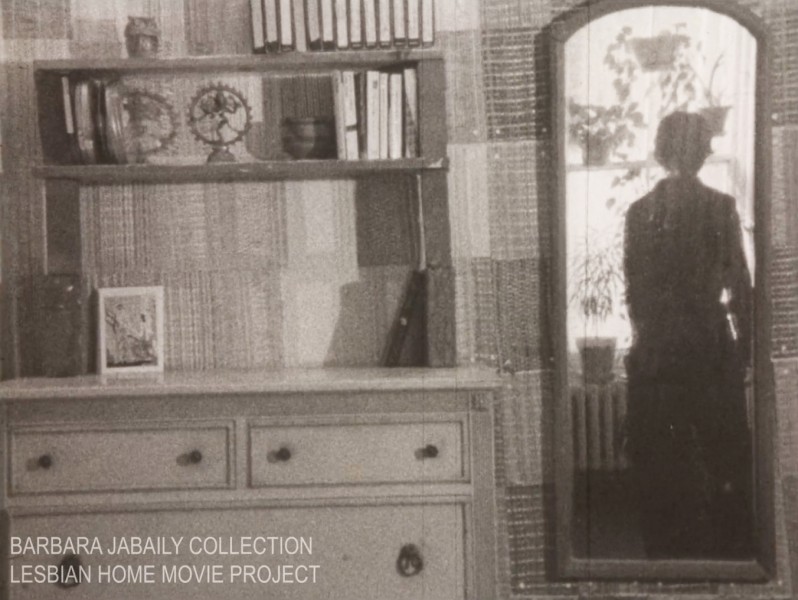
DIVERTIMENTO (1976) by Barbara Jabaily - Enlarge the image
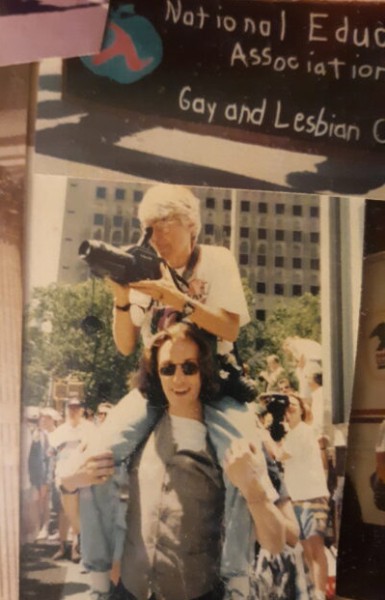
Emily Greene shooting the Gay Games in 1994 - Enlarge the image
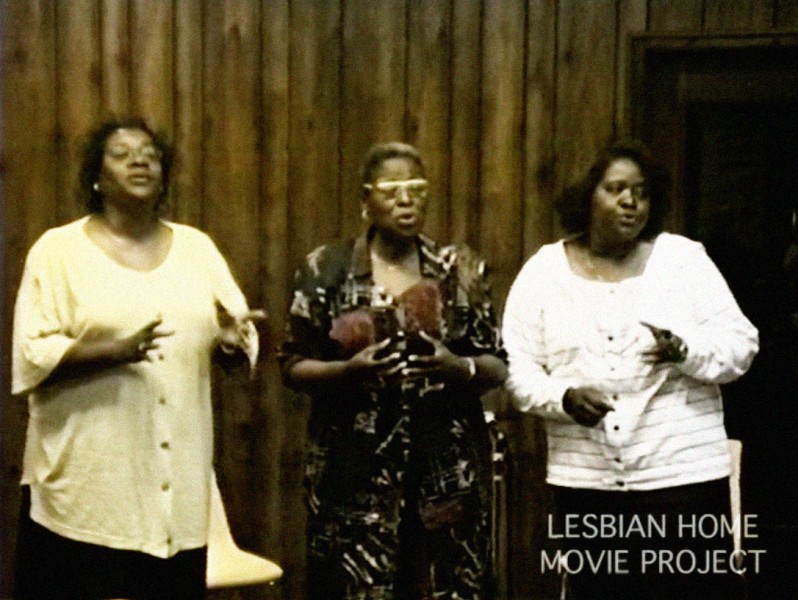
Feminist Herstory Night, Gainesville, FL, 1996. Filmmaker Corky Culver - Enlarge the image
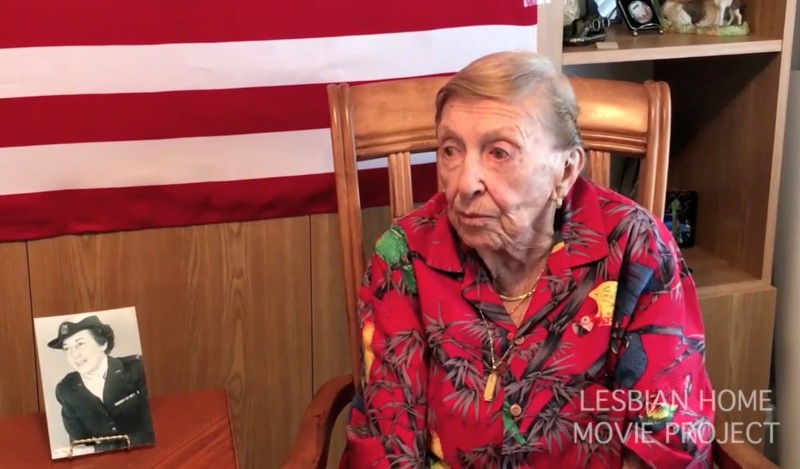
Bobby Williamson, Korean War veteran, in SERVING WITH PRIDE (2016) by Tricia Scully
COLLECTION HISTORY
Lesbian Home Movie Project (LHMP) began when filmmaker Sheila McLaughlin inherited a Maine cabin from her mother's lifelong friend Almeda "Meda" Benoit (1910-2007). Originally owned by Meda's partner Ruth Huntington Storm (1888-1981), and subsequently by Meda and Ruth together, the cabin contained several reels of 16mm film shot by Ruth Storm. McLaughlin soon realized reels were missing. At friend B. Ruby Rich's suggestion, she asked writer and Maine newcomer Sharon Thompson to help search for the lost footage.
Thompson located all but one of the missing reels at Northeast Historic Film (NHF) where a neighbor of Meda's had brought them for digitization and abandoned them. McLaughlin reclaimed those reels and had NHF digitize the rest. None contained the childhood footage she most hoped to find—that didn't surface until her mother died—but they did contain scenes of Ruth and Meda's friends, such as the writer Miriam "Mimi" Colwell (1917 -2014); Colwell's late partner, the musician and writer Chenoweth "Chennie" Hall (1908-1999); and several of that couple's friends, including painter Marsden Hartley.
Enthusiastic about the footage, Thompson began showing it to friends who then led her to more films. These hidden caches surprised Thompson and Rich who knew that very little lesbian footage existed in institutional archives. They founded LHMP to look for, preserve and document as much lost lesbian and lesbian-related footage as they could locate. When a 1/2" open-reel videotape surfaced, Rich and Thompson invited videotape afficionado Kate Horsfield, a founder of Video Data Bank, to join the project, and LHMP began soliciting videos as well as film. The timing of the shift was fortuitous. Because videos did not require entrusting footage to a lab, many lesbians felt much more comfortable shooting or participating in videos than they ever had in film. As time and technology moved on, it had become harder and harder to play analog video, making LHMP's offer to digitize the footage at no cost—other than helping LHMP preserve, document and ultimately share it—extremely attractive. The collections grew beyond the founders' wildest expectations.
In gathering film and video from moving image makers who had formerly guarded their personal histories for fear of exposure to law enforcement and ridicule, LHMP's expanding collection contributed to a more general effort to widen the practice of home movie collection which had formerly focused mainly on footage from heterosexual nuclear families.
In addition to showings at innumerable conferences in the US and abroad, footage from the LHMP collection appeared in episodes in the documentary series PRIDE—Tom Kalin's “1950s: The People Had Parties” and Cheryl Dunye's “1970s: The Vanguard of Struggle”—as well as in Stu Maddux's Reel in the Closet (2015). LHMP has also received grants from the Council on Library and Information Resources (CLIR)—in concert with Northeast Historic Film and Chicago Film Archives—and from New York Women in Film and Television (NYWIFT).
In 2023, the Harvard Film Archive became the long-term home of the LHMP collection. LHMP retains licensing rights and continues to collect footage. With the collection secure, Horsfield and Rich resigned from the board which now includes two filmmakers with work in the collection, Janet Prolman and Shirley Lasseter, in addition to Thompson who continues to serve as Executive Director.
PRESERVATION
Most of the materials originate on film or analog video, and every collection includes pre-digital media. To date LHMP has deposited almost 600 films and videotapes with the HFA. All originals are preserved and digitized from 16mm, 8mm, Super 8, open-reel video, VHS, MiniDV and Hi8. The collection also includes miscellaneous presentations on the archive as well as on specific filmmakers, videographers and topics, plus extensive supporting documentation.
RESEARCH
The collection is currently being processed and therefore temporarily closed to research. Please contact the collections staff with any questions.
ADDITIONAL RESOURCES
A number of LHMP videos and films are available on the project website and Vimeo page.
LHMP collections are frequently cited in academic publications. A few examples:
Dagmar Brunow, "Naming, shaming, framing? Ambivalence of queer visibility in audio visual archives," in The Power of Vulnerability: Mobilizing Affect in Feminist, Queer and Anti-racist Media Cultures, eds. Anu Koivunen, Katariina Ky Rola and Ingrid Ryberg (Edinburg: Edinburg University Press, 2018).
Dagmar Brunow, "Out of the closet, into cyberspace? Towards an archival ethics of care when curating digitized audiovisual heritage," forthcoming in Counter Archives: Communities, eds. Antoine Damiens et. al., Concordia University.
Dagmar Brunow, "Queering the Archive: Amateur Films and LBGT+ Memory," Chapter 4 in Making the Invisible Visible: New Approaches to Reclaiming Women's Agency in Film History, ed. Ingrid Stigsdotter (Lund: Nordic Academic Press, 2019), pp, 97-117.
Regina Longo, “Northeast Historic Film: ‘The Whole World Is Watching!’”, The Moving Image: The Journal of the Association of Moving Image Archivists, Vol. 10, No. 1 (SPRING 2010), pp. 164-169.
Sharon Thompson, "Chronicles," Lesbian Home Movie Project blog
Sharon Thompson, "Dreams Walking," Lesbian Game Changers, 5.7.2012
Sharon Thompson, "Powers of Suggestion: From LHA to Lesbian Home Movie Project," Sinister Wisdom #118 (Fall 2020), pp. 117-120.
Sharon Thompson "Urgent: The Lesbian Home Movie Project," Journal of Lesbian Studies, 19/1 (2015): 114-116.
The collection also includes talks and interviews with Executive Director Sharon Thompson. A few of these are online:
Queer Archives – three interviews with queer archivists, The Swedish Archive for Queer Moving Images, 3.27.2021
Sharon Thompson with the Shira Chorus at the Northeast Historic Film Symposium, 2009
Parker Sargent interview, 4.17.2018