After the Revolution.
Torre Bela & Red Line
…Torre Bela shows - materialized, embodied - all the key ideas of political and theoretical leftism from the past decade. ‘As if we were there’ - but precisely, we are no longer there: no one is.
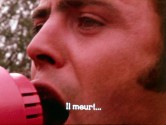
The singular career of German militant filmmaker Thomas Harlan (1929-2010) was forged in the crucible of his difficult birthright as son of Veit Harlan whose faithful service to Hitler made him one of the Third Reich’s most popular directors, best known as creator of the infamous and viciously anti-Semitic film Jud Süß. Determined to fight against his father’s legacy, Thomas Harlan dedicated his life to Leftist causes, fearlessly researching Nazi atrocities in Poland archives, traveling to Chile to join the Allendemovement, and then, in 1974, to Portugal to be part of the Carnation Revolution that had toppled the forty-eight-year Salazar dictatorship. It was in Portugal that Harlan turned his talents to filmmaking, inspired by the land reform movement sweeping the Portuguese interior to make a documentary about the attempt to turn responsibility for the historic quinta of Torre Bela from its nobleman owner, the Dukeof Lafões, to local farmhands and workers. The resulting film Torre Bela remains one of the emblematic Portuguese films of the revolutionary period, and one of the purest examples of militant documentary. Granted seemingly unfettered access to the ardent struggle, Harlan’s intimately observational film captures the ideological and logistical tensions fissuring the workers’ cause while also remaining attentive to the spirit of their movement. Gripping and operatic in its emotional surges and attention to the rough music of the imploring, shouting, collective voices, Torre Bela finds its climax and release in an unforgettable final sequence in which the workers together enter the Duke’s home and discover the true dimensions of luxury and privileged lived within, Harlan’s gliding camera capturing both the full range of group’s reaction while nevertheless giving poignant human texture to the personal and political history redolent in the abandoned furniture, photographs and souvenirs.
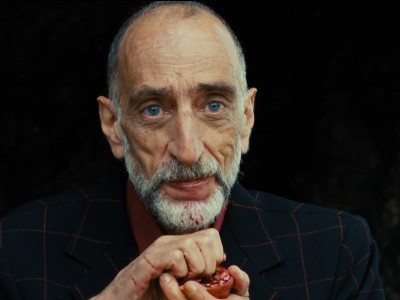
In 2011 documentarian José Filipe Costa returned to Torre Bela—the film and the site itself—to re-examine Harlan’s work and his role as observer, participant and perhaps direct influence upon the events that therein took place. The documentary Red Line offers a nuanced and fascinating look back upon the revolutionary movement and its aftermath while paying homage to the work of Harlan and his editors, and the difficult, perhaps impossible, path of the militant documentary cinema they sought to define. Interviews with key figures from the film—including the movement’s charismatic leader Wilson—are at times startling for their frankness, honesty and ambiguity.
The Harvard Film Archive is thrilled to present the marvelous digital restoration of Torre Bela by the Cinemateca Portuguesa and gives special thanks to the Cinemateca’s Director José Manuel Costa. – Haden Guest