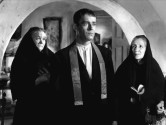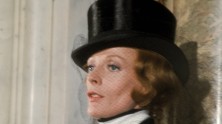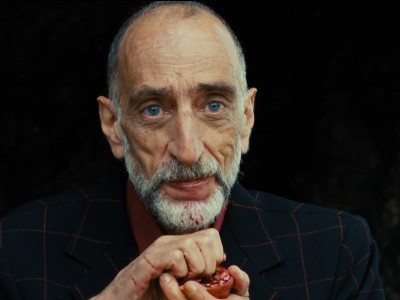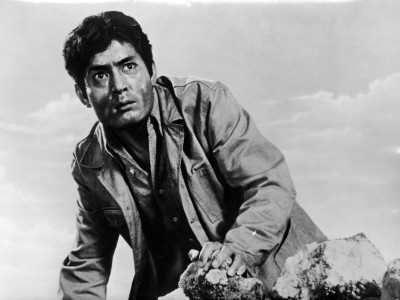
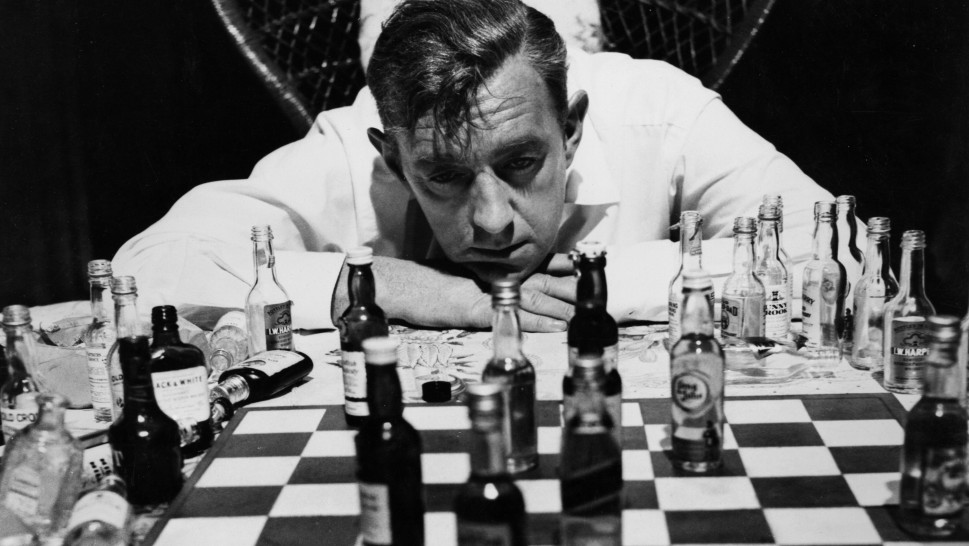
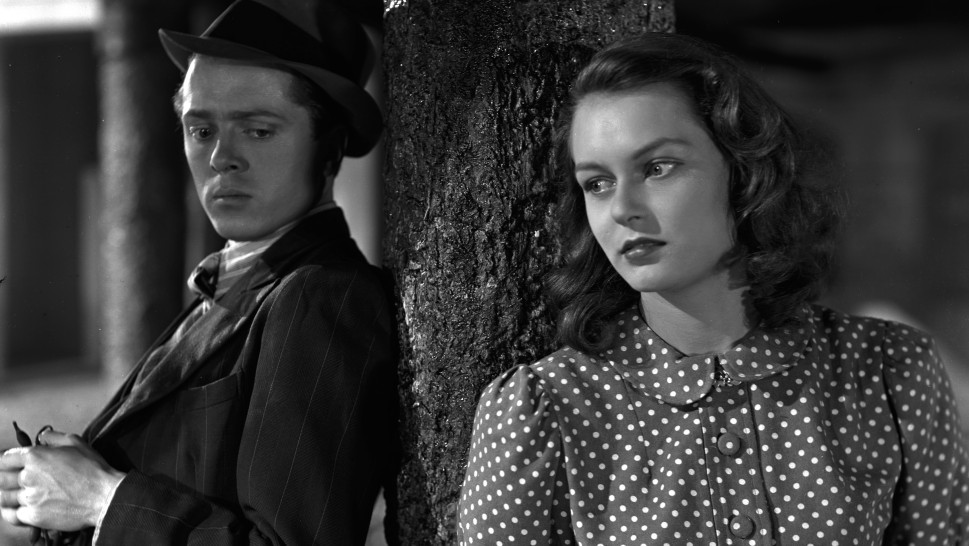
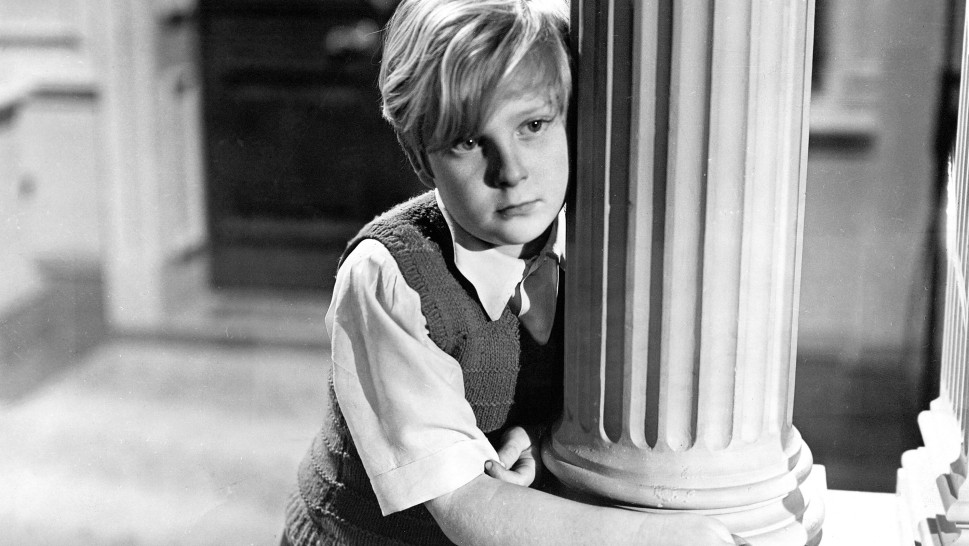
The Cold Heart is More Precious than Diamonds. The Cinema of Graham Greene
“I suppose, too, that every novelist has something in common with a spy,” wrote Graham Greene about his first brush with espionage in college. “He watches, he overhears, he seeks motives and analyzes character, and in his attempt to serve literature he is unscrupulous.” Greene knew whereof he spoke; over the course of his adult life, he was, for certain periods, a spy, but more consistently a prolific writer, publishing twenty-six novels in addition to plays, autobiographies and short stories. At the time of his death, he had been translated into twenty-seven different languages and had sold more than twenty million copies.
Not all of Greene’s novels were adapted to film, but there are a remarkable number of movies based on his work: thirty-six, including a few remakes of earlier popular adaptations. And while Greene wrote a number of these, even those he did not write share an internal cohesiveness rooted in the very specific emotional landscape that motivates a Greene character, as well as the common denominators of espionage, crime and adultery. An awareness of innocence drives Greene’s characters as a precarious, precious state inevitably betrayed countless times throughout a life.
Greene was aware of this thematic cohesion in his work. The screenplay of La Mano del Straniero, or The Stranger’s Hand, a 1954 British and Italian co-production, was born from a few chapters he had submitted under a pseudonym to a writing competition in the manner of Graham Greene (he came in second). In it, Greene distilled his own style thus: a little boy with a wide-eyed, innocent view of the world must search for his missing father, which leads him into a seamy underworld of international espionage and interpersonal double-crossing. Mario Soldati’s subsequent film, extrapolated from these chapters, was an attempt to out-Graham Greene all other Graham Greene adaptations by shooting on location in the twisting streets of a European city—lending a distinct character of place to the narrative—and by casting Trevor Howard and Alida Valli, stars of other successful Greene adaptations, in key roles.
Greene was born in 1904, just a short time after the earliest exhibitions of moving pictures, and he was already an avid film viewer when sound changed everything. (“I was horrified by the arrival of ‘talkies’ (it seemed the end of film as an art form),” he wrote.) By the time color entered the pictures, he was a professional film critic (“The only complaint I have against Technicolor is that it plays havoc with women’s faces; they all, young and old, have the same healthy weather-beaten skins.” Becky Sharp review, 1935). He met each of these technological shifts with a deep analytical curiosity about what challenges or opportunities these changes might offer for the art of storytelling on screen. By the time of his death in 1991, the movies he loved so much had undergone seismic transformations, and Greene had been a part of the industry through most of them.
Greene began writing movie reviews as an undergraduate at Oxford and soon became the film critic for The Spectator, where he published over 400 reviews. Around the end of this period, he penned his first screenplay, 21 Days. “My first script—about 1937—was a terrible affair,” he wrote later in an introduction to a collection of his film reviews, “and typical of the cinema world. I had to adapt a story from John Galsworthy … If the story had any force in it at all it lay in its extreme sensationalism, but as the sensation was impossible under the British Board of Film Censors who forbade suicide and forbade a failure of English justice, there was little of Galsworthy’s plot left when I had finished.” This would not be the last time Greene ran into a standoff with the British Board of Film Censors (perhaps most notably with his Brighton Rock script), but it would be one of the last times he adapted a work not his own. Greene’s focus when adapting prose for the screen was its fidelity to the spirit of the text, and he felt the most confident in achieving this when working with his own writing.
Greene’s most successful and collaborative partner in filmmaking was director Carol Reed, whose work Greene had followed first as a critic, before joining him on set. Greene had been publicly impressed with and supportive of Reed’s work during his gun-for-hire period as a studio director assigned a number of so-called “quota quickies,” and he continued to be so through their three-film collaboration, which produced not only the most well-known of Greene’s screenplays, The Third Man, but also the thriller-farce Our Man in Havana and The Fallen Idol, a film which diverged widely from the short story on which it was based.
This selective retrospective will explore some of the most interesting and celebrated examples of Greene’s intersections with the film world, including adaptations of his work that he wrote, adaptations written by others, and an afternoon of movies he championed in his film reviews. It is also an opportunity to share the beautiful new 35mm print of The Third Man, which has just entered the HFA collection. – Sidney Dritz
Upcoming screenings from this program
The Third Man
Past screenings from this program

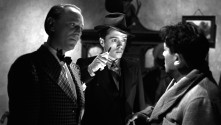
Zéro de conduite
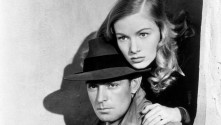
Confidential Agent
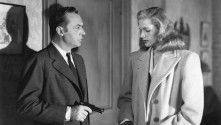
The Heart of the Matter

Ministry of Fear
Went the Day Well?
The Fugitive