Dead Youth
A Page out of Order
Live Musical Accompaniment
Screening on Film
American-born novelist, essayist, and film scholar Donald Richie has been a resident of Japan for more than half a century. His numerous books on Japanese culture (including The Inland Sea and A Lateral View: Essays on Culture and Style in Contemporary Japan) and cinema (among them, Japanese Cinema: An Introduction and Ozu) have been instrumental in bringing an understanding of Japanese society and cinema to Western audiences and remain classics in the field.
Live musical accompaniment is provided by local ensemble Sabana Blanca, with Takaaki Masuko on percussion, Johannes Ammon on violin, and Andrew Blickenderfer on bass.
PROGRAM
-
Dead Youth
Directed by Donald Richie.
Japan, 1967, 35mm, black & white, 14 min.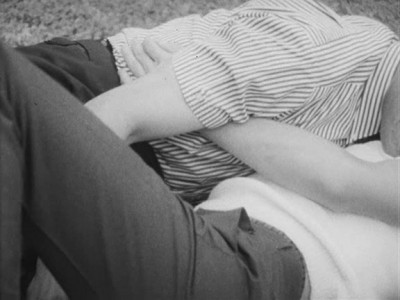
Noted authority on Japanese cinema Donald Richie made a series of experimental, “personal” films of his own during the 1950s and 1960s. Based on a poem by Mutsuro Takahashi, his Dead Youth is a lyrical meditation on time and memory that explores the grief-stricken actions of a group of men in response to the death of a friend. The recurring image of the young man’s body washed by the sea forms the basis for this reflective, universal elegy.
-
A Page out of Order (Kurutta Ippeji)
Directed by Teinosuke Kinugasa.
With Masuo Inoue, Yoshie Nakagawa, Ayako Iijima.
Japan, 1926, 35mm, black & white, silent, 60 min.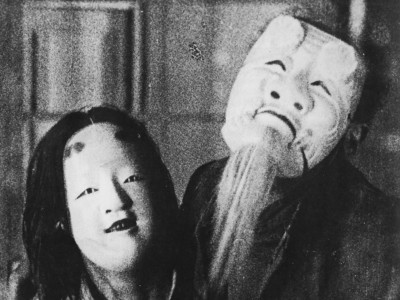
Lost until 1971, Teinosuke Kinugasa’s 1926 avant-garde masterpiece A Page Out of Order provides a fascinating, if unique, glimpse of Japanese silent film. Made by the artistic pioneer whose Gate of Hell (1953) would later help to bring his country’s cinema to the attention of the West, the film relates the story of a seaman who takes a job as janitor in a mental asylum in order to free his wife, incarcerated after a suicide attempt that succeeded only in drowning their baby son. Using no intertitles to relay his disturbing tale, Kinugasa relies soley on visual invention—“expressionistic” camera angles, unearthly lighting enhanced by sets that were painted silver, penetrating close-ups, and superimpostions. This startling work of radical invention easily rivals the most advanced avant-garde practices of the West, although these could not have been known to Kinugasa at the time.
Part of film series
Screenings from this program
An Evening with Donald Richie
Antonio das Mortes