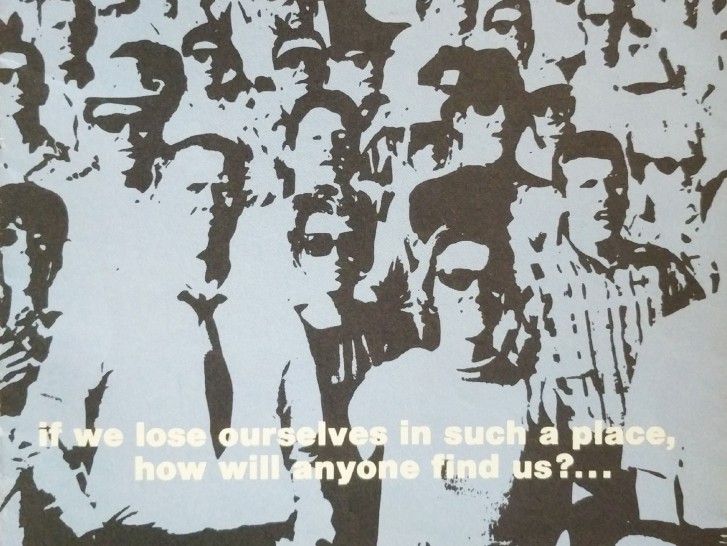
It is a communication not only between films and people, but between people and people. Each evening will conclude with the audience invited to share their feelings about the new ideas, new alternatives and approaches presented by the films. Together they will consider how they might do better at living and living up to their potential in themselves and their new world. ... Hear behavioral scientists explain the reasons we act as we do and how we might change that behavior. See the kind of communication people are seeking through honest confrontation in several kinds of encounter experiences. Discover ways to reach more of your potential. Consider other states of consciousness. Question the experiences of people trying alternative life-styles, even those searching for them through the development of bio-feedback, ESP, and other psychic sciences. Somewhere you may discover a new direction in your search to find yourself and more of your potential for living fully.
Managed by founder Geraldine "Jerry" Diamond with Maxine Simons in the early 1970s, the National Psychomedia Center created a unique, innovative approach to film programming and distribution, focused not on promoting particular films or filmmakers, but instead on generating discussion, provoking reflection of self, society and alternative ways of living, and possibly activating positive change.
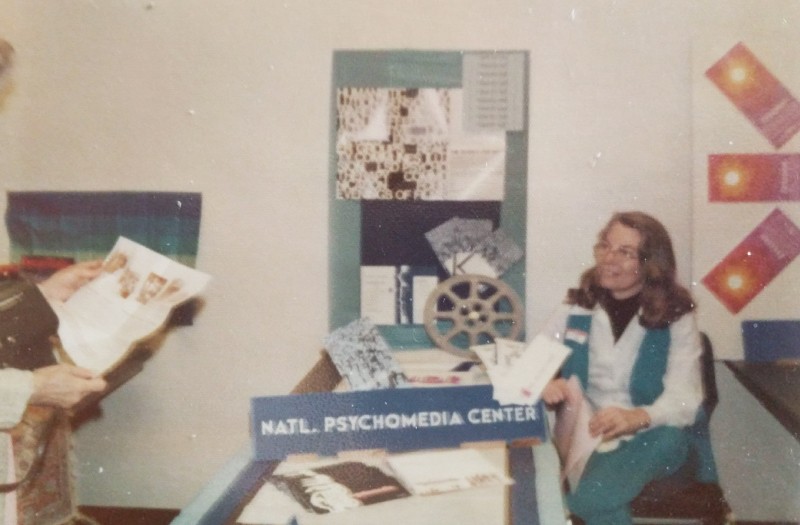
Based out of the Santa Monica area, Psychomedia was part of the West Coast New Age movement which had emerged from Sixties' counterculture. The growing interest in psychology, "human potential," Eastern philosophy, spirituality, holistic health, the paranormal and psychedelia, among other topics, naturally spilled over into the educational film world, yet many of these films had limited audiences and distribution. Knowing there were people across the country eager for this kind of information, Diamond devised a method to disseminate the films and their ideas widely via a dynamic structure that emphasized a participatory interaction with the media.
In line with its outside-the-box content, Psychomedia's business plan was unusually equitable. Psychomedia sent curated packages of 16mm films to interested schools, community organizations and spritual groups, as well as, "growth centers, free clinics, churches, colleges, mental health centers." They shipped the films and accompanying materials, rented the space, suggested ticket prices and then helped promote the "film gatherings." All profits were shared between Psychomedia and the participating organization; the greater the ticket sales, the higher the percentage the organization received, so it involved no risk, no cost and very little labor on the part of their customers who often increased their own memberships as a result.
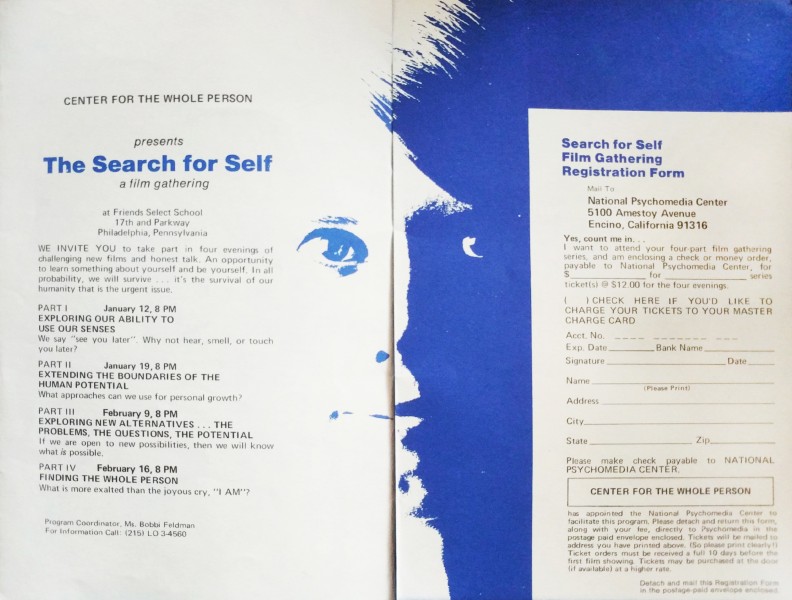
"The Search for Self" is an example of a popular program, separated into individual sections: "Exploring Our Ability to Use Our Senses," "Extending the Boundaries of the Human Potential," "Exploring New Alternatives... The Problems, The Questions, The Potential," and finally, "Finding the Whole Person." Films within this series included Meditation Crystallized – Lama Govinda on Tibetan Art (1973); The Year of the Communes (1972); Psychics, Saints and Scientists (1972); Come to Your Senses (1971) and Your Choice, "An intimate film of a group that has just watched the same film you have seen. They share and discuss their reactions to the experience and then invite you to share yours." The film selection for each location may have been somewhat flexible according to availability.
Though successful, Psychomedia was ultimately short-lived and had no known antecedents. Soon after Simons left for family reasons, Diamond moved on to other projects.
About the Collection
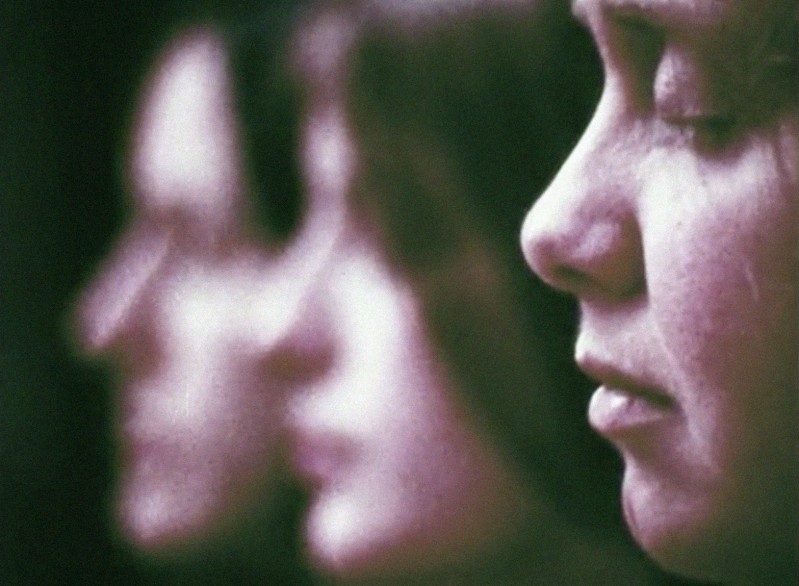
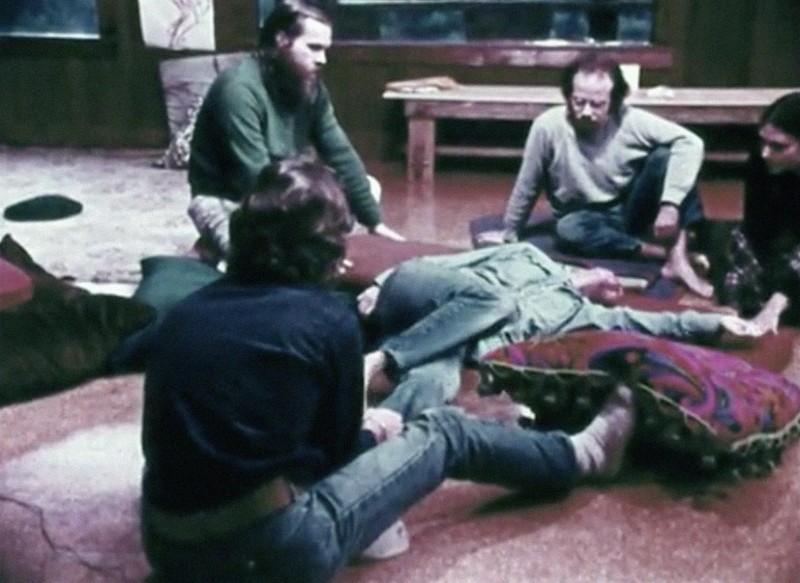
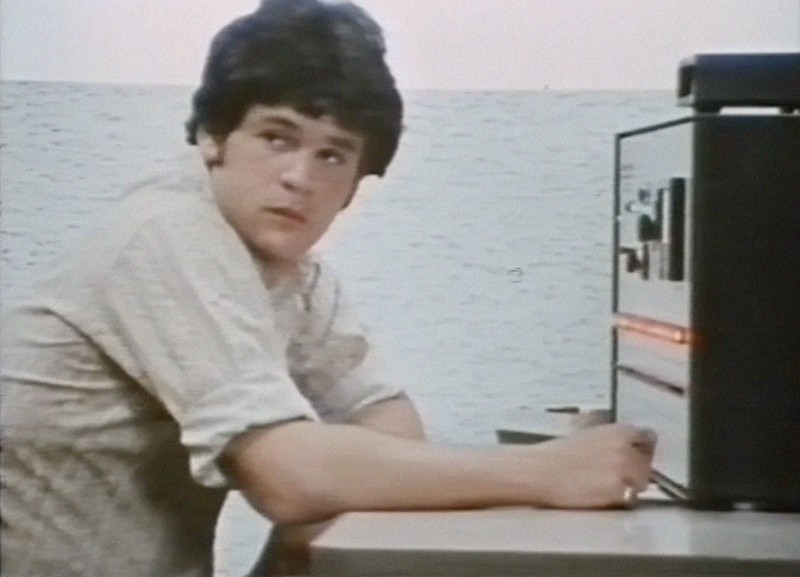
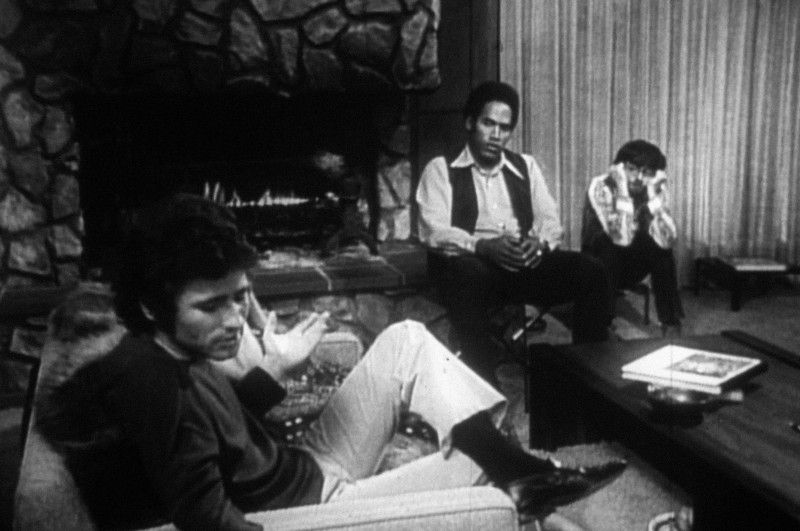
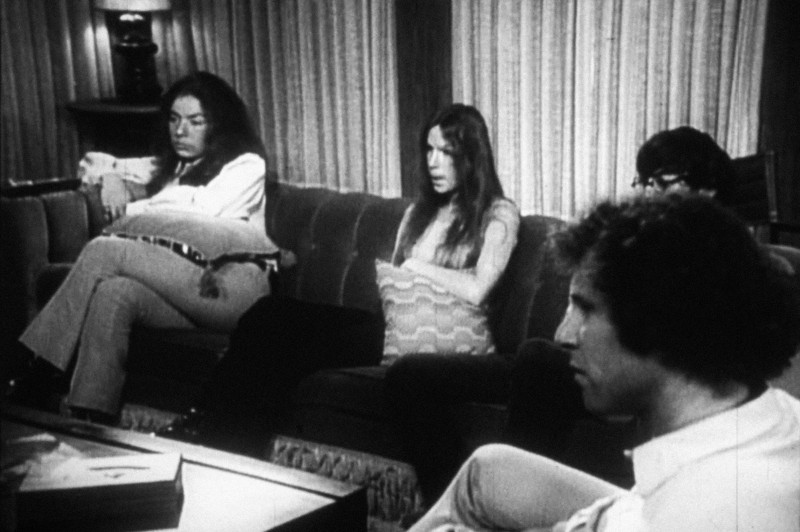
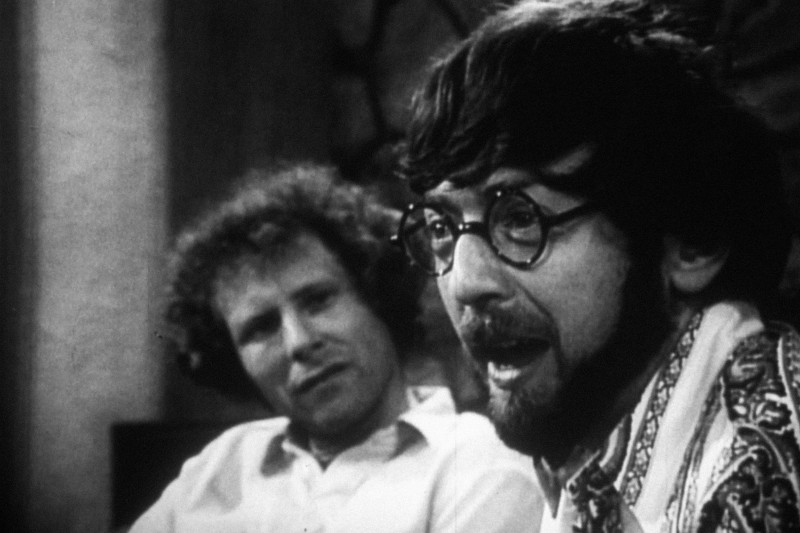
The Psychomedia Collection includes 16mm prints of An Approach to Growth (1973) detailing the self-awareness practices at the Lomi School led by Robert Hall, including yoga, Gestalt therapy and massage; ...And Everything Nice (1974) about society's expectations of women; Come to Your Senses (1971) featuring the teachings of Bernard Gunther at the Esalen Institute; Journey Into Self (1968) which won an Oscar for its depiction of "encounter group" therapy; Moral Development (1973) documenting Stanley Milgram's famous obedience experiments; Sunseed (1973) which introduced several gurus who popularized Eastern spiritual practices in the US; The Ultimate Mystery (1973) focusing on a variety of parapsychological events; and We Have No Art (1967) about the artist Sister Corita Kent. Also included in the collection is WHY? (1971), a film produced by Robert Cohn—who would become President of Psychomedia—and commissioned by Technicolor primarily as an experiment in early video-to-film. Using a documentary style, WHY? imagines a series of group therapy sessions with young people portrayed by actors who seem to play versions of themselves—including O.J. Simpson, Jeannie Berlin, Tim Buckley and Danny Goldman—facilitated by the psychologist Herb Goldberg, famous for his book The Hazards of Being Male (1977) and his leading role in the "male liberation" movement.
All of the films in the collection have been catalogued in HOLLIS.