Sternberg Before Dietrich
For many years Josef von Sternberg (1894-1969) was known primarily as the director of extraordinary and iconic star vehicles for Marlene Dietrich, beginning in Germany with The Blue Angel (1930) and continuing at Paramount through the mid-1930s. Despite their sumptuous and daring stylistic achievements, Sternberg’s seven-film collaboration with Dietrich was simply the extension of a remarkably expansive and innovative exploration of cinematic style begun earlier and refined in his still underappreciated silent films. In these astonishingly accomplished features, his innate talent for innovative, expressive lighting and poetically charged mise-en-scene was made immediately apparent. Vividly legible in the silent films as well are rich expressions of the quintessentially Sternbergian themes of dark fatalism, inexorable decline, moral corruption and the bewitching thrall of doomed love. Sternberg’s silent films remained little seen for far too long, with several key titles lost and others available solely in inferior prints, until the work of intrepid scholars and archivists such as the talented film historian Janet Bergstrom and Austrian Film Museum Director Alexander Horwath. Guided by the work of Bergstrom, Horwath and other dedicated scholars - and especially the important recent restoration by UCLA of Sternberg’s The Salvation Hunters and the rediscovery of a fragment from the lost The Case of Lena Smith - we finally have a fuller understanding of Sternberg’s early formation as one of Hollywood’s most complex artists.
Born Jonas Sternberg in Vienna to an impoverished family of Orthodox Jews, Sternberg divided his childhood between Austria and the United States. Among the many jobs that proceeded his film career was his work as a lace salesman, an experience that Sternberg would later credit as formative to the play of light that animates his best films, not to mention his repeated use of gossamer fabric as visual and narrative texture, as the source of ceaseless shadow patterns and an organic flow of veiling and unveiling.
After gaining the notice of studio executives with the surprise success of his independently produced debut feature, The Salvation Hunters, Sternberg quickly earned a place for himself in Hollywood, working his way from assistant to director and accepting the “von” given to him by a producer. In 1927 Sternberg began a long and fruitful relationship with Paramount that led to such classics as The Last Command and The Docks of New York and eventually to the celebrated Dietrich cycle. Throughout his career Sternberg repeatedly portrayed himself as a cinematic poet, an artist who uses the image as a poet uses language, defamiliarizing habitual meaning through an emphasis upon mood, tone and connotation. Certainly in the marvelous silent films showcased in this selective retrospective Sternberg sets aside traditional concerns for classical narrative and psychological realism in favor of immersive mood and entrancing spectacle.
Past screenings from this program
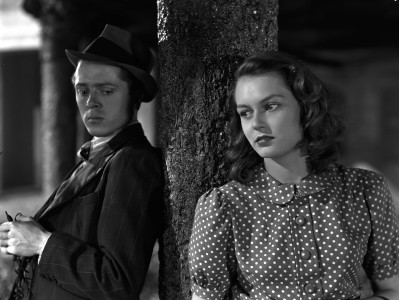
The Salvation Hunters

The Docks of New York

Underworld

The Last Command

Thunderbolt