A Pitcher of Colored Light
Ruskin
Screening on Film
$10 Special Event Tickets
Robert Beavers (b.1949) began his extraordinary career in film at the precocious age of seventeen, the same year he met Gregory Markopoulos, the influential avant-garde filmmaker who would become his partner for life, and permanently relocated to Europe. Together Beavers and Markopoulos bravely dedicated themselves to a singular mode of art cinema that adamantly refused all commercial impulses and maintained a careful distance from the major currents of contemporary American experimental cinema. Until the mid-1990s, Beavers, like Markopoulos, strictly controlled the exhibition of his work, restricting screenings to an annual series of outdoor events in Greece. In the last decade Beavers has selectively exhibited his films in and outside of Europe, always to tremendous critical acclaim.
Frequently drawing inspiration from European art and architecture, Beavers' films are equally noted for their intricate mosaic-like structure and exquisite framing as their insightful exploration of history and art. The thematic and formal complexity of Beavers' films is balanced by the sensuous beauty of every image contained within them. For the last ten years Beavers has re-edited and re-worked the sound for almost all of his films and organized them into an ambitious omnibus work entitled My Hands Outstretched to the Winged Distance and Sightless Measure.
PROGRAM
-
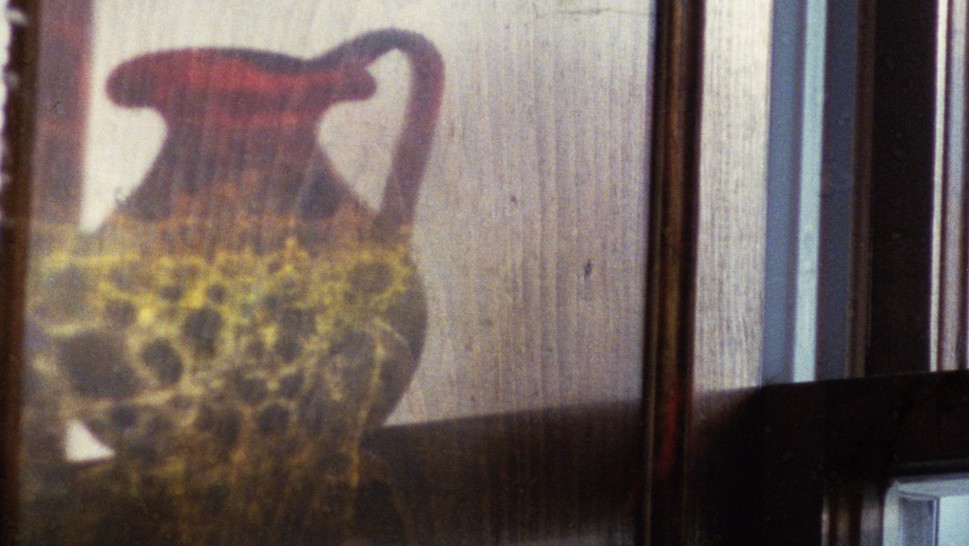
A Pitcher of Colored Light
Directed by Robert Beavers.
US, 2007, 16mm, color, 25 min.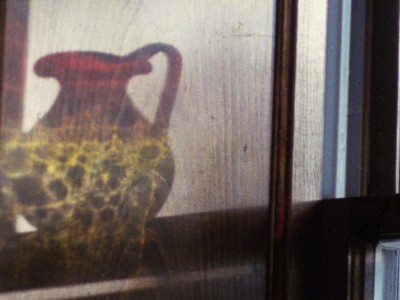
Beavers' latest film is among his most entrancing works, a portrait of his aging mother that also follows the passage of the seasons around her cottage in Massachusetts. The artist's first film shot entirely in the US since 1966, A Pitcher of Colored Light is tinged with a melancholy sense of time passed.
…The shadows play an essential part in the mixture of loneliness and peace that exists here. The seasons move from the garden into the house, projecting rich diagonals in the early morning or late afternoon. Each shadow is a subtle balance of stillness and movement; it shows the vital instability of space. Its special quality opens a passage to the subjective; a voice within the film speaks to memory. The walls are screens through which I pass to the inhabited privacy. We experience a place through the perspective of where we come from and hear another's voice through our own acoustic. The sense of place is never separate from the moment.
-
Ruskin
Directed by Robert Beavers.
US, 1974/1997, 35mm, color and b&w, 45 min.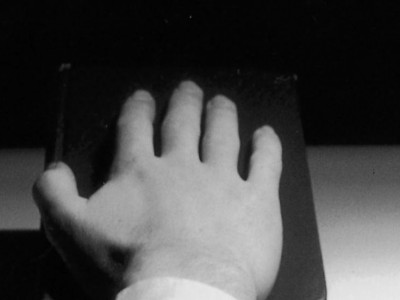
Originally shot on 16mm and now presented in a beautiful 35mm blow-up, Ruskin is a wonderful, complex work that explores the city of Venice guided by John Ruskin's melancholy text, The Stones of Venice. In Beavers' film Venice awakens as a city haunted by the layers of history found within its most intimate architectural details and evoked in the isolated sounds brilliantly woven throughout the film – water lapping, approaching footsteps, a single extended chord on an organ. The frequent presence of the filmmaker's hands – a recurrent motif throughout Beavers' work – evoke the hand-crafted, almost sculptural quality of his unique cinema.