Big Ware
K. 491 in Preparation
Screening on Film
-
Big Ware
Directed by Philip Trevelyan.
UK, 1975, 16mm, color, 40 min.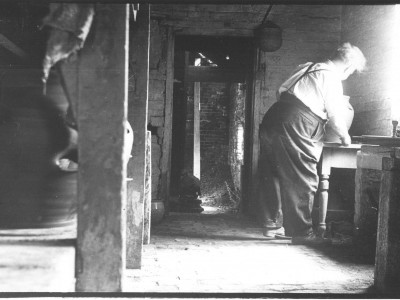
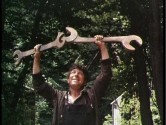
This is a record of the last pottery in England that made the everyday pots that households and businesses have used for centuries. The potter, Mr. George Curtis, remembers that, in his youth, he helped fill whole railway-goods carriages with earthenware pottery. Even as the film was being made, his orders included huge numbers of nesting bowls, made especially for the racing pigeons kept in lofts by the working people of Northern England. The last man to be continuing the tradition, Mr. Curtis digs his own clay, prepares it, throws it, fettles it and fires it in his kiln. His performances at the pottery wheel demonstrate powerful and extraordinary skills; George’s modest claim to fame is his throwing speed, which kept him in work throughout his life. His enthusiasm and knowledge are infectious, while the craft itself is fascinating. The film follows him while he talks us through the various tasks. Toward the end of the film, he taps the fired pots as they come out of the kiln: “You can always tell a good pot by the sound of it.” All that he shows us rings true.
-
K. 491 in Preparation
Directed by Philip Trevelyan.
UK, 1983, 16mm, color, 55 min.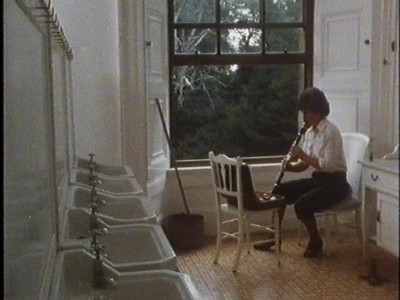
The treatment for this experimental production was based on the idea that before a musical performance, principal players work on their parts and that their private practice allows them a deep exploration of the music. As an amateur bassoon player, my own practice suggested that this was often true. Could this interior feeling be conveyed on film? There were three conditions imposed on the production: every note of the musical score was to be played, there were to be no words, and the programme (which was commissioned by television) had to be an hour long.
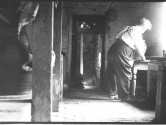
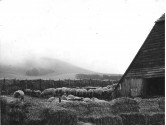
Everything takes place in and around the venue for the concert, which is an imposing 18th century house. I knew that the pianist would be practising on the piano in the house and that, because the orchestral members were staying in the same house, it seemed likely that they might also practice, albeit in separate rooms. My idea was to join together the pianist’s solo work with the string and wind players’ practice in a sequence of continuous musical coincidence. Meanwhile, I noticed that farmers and shepherds were also busy with their work outside. It felt to me that these two worlds could be shown to coexist, and that collisions between the inside and outside activity might add an extra dimension to the production.
Part of film series
Screenings from this program
The Moon and the Sledgehammer