The Umbrellas of Cherbourg
Hyenas
-
The Umbrellas of Cherbourg (Les parapluies de Cherbourg)
Directed by Jacques Demy.
With Catherine Deneuve, Nino Castelnuovo, Mac Michel.
France/West Germany, 1964, 35mm, color, 92 min.
French with English subtitles.
Print source: Harvard Film Archive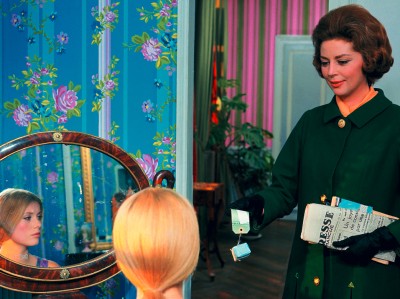
Demy’s modern-day opera portrays a tale of loves found and lost in a postwar landscape ridden with anxiety, isolation and consumerism. Radical in its proposition to reclaim the musical genre by obviating dialogue for songs throughout the entire film, Umbrellas is set to the backdrop of the gritty French port city of Cherbourg in the late 1950s, bursting in colors and dizzying patterns, showcasing Technicolor in all its glory. This tragic romance begins with the innocence of a fairy tale love between young Genevieve and Guy, full of dreams of a future together. Guy, however, is called to serve in the Algerian War, and Genevieve, heartbroken, remains behind. Distance is cruel and reality is difficult, and Genevieve is faced with practical decisions regarding her future. What ensues is a portrait of desolation in loneliness, the fragility of the human spirit and the ability to find hope restored. – Stella Guest ‘29
-
Hyenas (Hyènes)
Directed by Djibril Diop Mambéty.
With Mansour Diouf, Ami Diakhate, Djibril Diop Mambéty.
Senegal/Switzerland/France, 1992, DCP, color, 110 min.
Wolof with English subtitles.
DCP source: Trinipix
Both an adaptation of Swiss playwright Friedrich Dürrenmatt’s satire The Visit (1956) and a spiritual sequel to Touki Bouki, Mambéty’s rich allegory unfolds in the village of Kolobane, the director’s birthplace and that of the wealthy, worldly Linguère Ramatou, who left it long ago, forced into a life of dissolution and suffering that happened to pay off financially. Her much-anticipated return elicits an exultant response from Kolobane’s desperate populace, whose dreams of opulence suddenly afflict them with a selective memory and a malleable moral compass. It is Mambéty himself—as Ramatou’s newly appointed Chief Justice—who outlines the part local shopkeep Dramaan Drameh played in her downfall, fatally sentencing him while granting the town riches beyond their wildest dreams. Ramatou’s cruel, conditional “gift” pulls the curtain back on capitalism—exposing the essential dynamic within a society centered around money and material accumulation.
The only character conscious of the depths of this spiritual crisis is the guilty man himself, Dramaan, whose sacrificial status allows him to palpably comprehend the injustice. Vividly illustrated in a Touki Bouki-esque magical reality with potent iconography—Ramatou’s golden prosthetics are particularly striking—Hyenas both encapsulates and transcends the complexity of the postcolonial African experience. In the words of film scholar Clyde Taylor, “[Hyenas] is singular in leaving no ideological or sociological space for any viewer to hide, African or foreign, black or white, female or male, in witnessing the moral crisis of contemporary humanity from an African viewpoint.” – Brittany Gravely
Part of film series
Screenings from this program

Funeral Parade of Roses / Land of Silence and Darkness