Odes to Land and Labors of Love.
The Films of Philip Trevelyan.
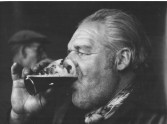
Philip Trevelyan (b. 1943) is a legendary yet sorely unheralded British filmmaker rooted in the rich tradition of poetic documentary that flourished in England during the Thirties. His lyrical films offer portraits of resolutely local communities seemingly fixed in time and people who live in intimate communion with the land. The Ship Hotel – Tyne Main is the name, subject and location of his arguably most exemplary film, a moving portrait of a Tyneside pub that captures the melancholic utopia of a Sunday gathering of singers, domino-players and lovers, joined briefly in drinks, garrulous affection and rousing song. Completed as his degree film at the Royal College of Art, The Ship Hotel – Tyne Main reveals the equally anthropological and poetic gaze that gives Trevelyan’s filmmaking such a rare sensitivity to the subtlest nuances of place and gesture. Trevelyan masterfully interweaves the distinct voices and lived experiences embodied by the pub-goers into a composite portrait tracing the deeper history of heavy industry in Northern England with the unspoken dreams of young and old gathered around the pub’s flickering hearth fire. Equally impressive as Trevelyan’s camerawork is his close attention to sound and the musicality of the human voice, a love of rhythmic cadence that would culminate, years later, in a moving tribute to poet Basil Bunting.
While Trevelyan himself openly embraces his close allegiance to British documentarians such as John Grierson and Basil Wright, his singular artistic sensibility should also be traced hereditarily to his father, the celebrated painter Julian Trevelyan, and his mother, the influential potter Ursula Mommens. For, guided by his parents’ example, Trevelyan pursues cinema less as a profession than a vocation, a higher calling, a labor of love. This same attitude is expressed by the devotion to their craft of the poets, potters, farmers, musicians and inventors who inhabit Trevelyan’s films and by the patient intimacy that gently connects his camera and subjects. Yet the abiding interest of Trevelyan’s films in the distinct local and rural life unique to England must also be tied to his remarkable dual career as a pioneering organic farmer who brought new innovation to chemical-free agriculture through his design of award-winning tools for weeding without pesticides. Big Ware, a portrait of an aging potter still working tirelessly, delights as both a documentary of a dying art and an ode of sorts to English soil, the clay-veined terroir transformed into moon-shaped vessels.
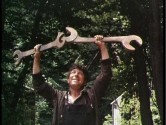
Largely underappreciated, even in his native land, Trevelyan found a sudden new fame with the recent rerelease on DVD of his now best-known film The Moon and the Sledgehammer, a portrait of an eccentric family living willfully off the grid of modern life in a ramshackle compound dedicated to steam engines and dreams of other times. An unexpected lament for the end of the Industrial Age, The Moon and the Sledgehammer is both a strong critique of the hectic, unthinking pace of modern life and a poignant wish for a woefully lost connection to the land. Many have seen the strong connections between Trevelyan’s cult film and the work of younger British filmmakers such as Ben Rivers and Luke Fowler.
The first retrospective dedicated to Philip Trevelyan, this program brings together films spanning his entire career, with Trevelyan present to introduce and discuss his work. Also joining the program is producer Katy MacMillan and Chris Killip, VES Professor and celebrated photographer, whose own pioneering early work also explored the Tyneside region. – Haden Guest
Past screenings from this program
The Moon and the Sledgehammer