I Was Born, But… / Pixote
Live Musical Accompaniment
Screening on Film
-
Feed the Kitty
-
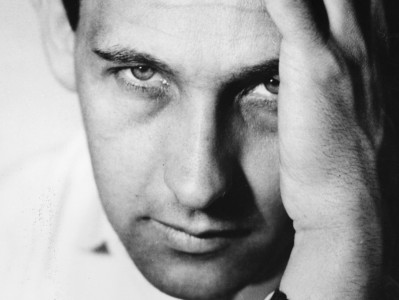
I Was Born, But… (Otona no miru ehon: Umarete wa mita keredo)
Directed by Ozu Yasujiro.
With Saito Tatsuo, Sugawara Hideo, Tokkan Kozou.
Japan, 1932, 35mm, black & white, silent, 90 min.
Japanese intertitles with English subtitles.
Print source: Harvard Film Archive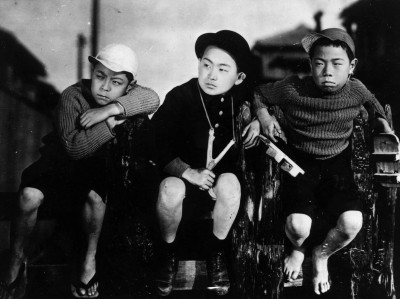
One of Ozu’s earliest successes, A Picturebook for Adults: I Was Born, But… is full of the low-brow humor one would expect from a film chronicling the antics of schoolboys. However, masterfully woven into the film are the seeds of a generational divide he would obsessively revisit throughout his career. As young Keiji and Ryoichi Yoshi contend with the arbitrary hierarchies of the playground, they begin to question their father’s own importance. The film’s central question then emerges: what truly separates children from adults? A potential answer can be found in its very form. Ozu’s frames are marked by a still sophistication whose maturity is highlighted by the film’s bold comedic editing. The movie’s youthful spirit dwells in these cuts because of their potentiality: whereas a frame is decided, a cut is a surprise that can lead to any new image. It is this curious gap between the child’s unlimited future and the adult’s rigid past that has kept Ozu’s early masterwork resonant for almost a century.
Live musical accompaniment by Jeff Rapsis
-
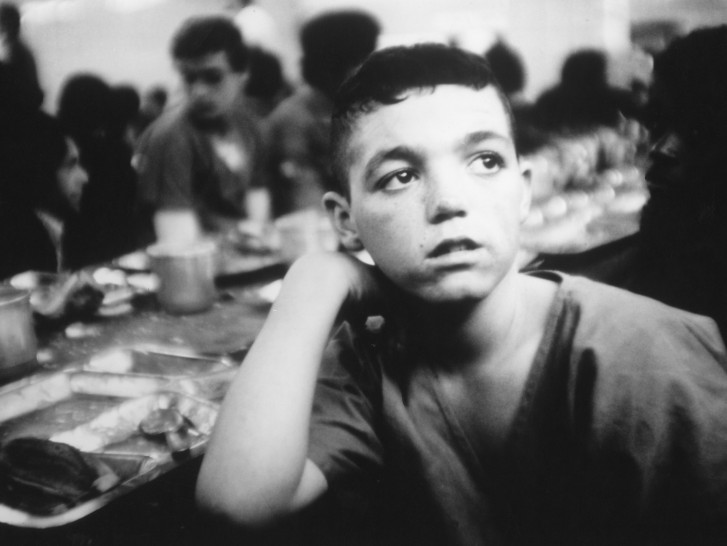
Pixote
Directed by Héctor Babenco.
With Fernando Ramos da Silva, Jorge Julião, Gilberto Moura.
Brazil, 1980, DCP, color, 128 min.
Portuguese and English with English subtitles.
DCP source: Janus Films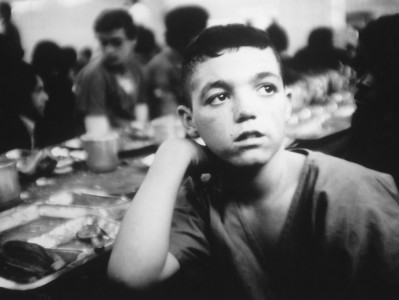
The impetus for Pixote emerged from director Héctor Babenco’s research for a scrapped documentary on juvenile correctional facilities in Brazil. After years of private visits and interviews, the reformatories denied him access to film on location, presumably due to fears of the movie exposing their poor living conditions and corrupt, abusive leadership. Babenco then set out to make a fictionalized account of the interned children he observed, adapting the plot from Jose Louzerio’s novel Childhood of the Dead. Through an approach inspired by documentarians and Italian Neorealists alike, Pixote imbues its constructed narrative with a shocking authenticity. Non-actors with lives similar to the film’s protagonists constitute the cast, including the incredible Fernando Ramos da Silva—who was coincidentally killed at nineteen in a police shootout. Despite the tragic fates determined for these children by their circumstances, Babenco’s film remains a testament to their hope and resilience. Within a system that breeds distrust, they have no choice but to trust each other.
Part of film series
Screenings from this program
I Was Born, But… / Pixote
Where is the Friend’s House? / The 400 Blows