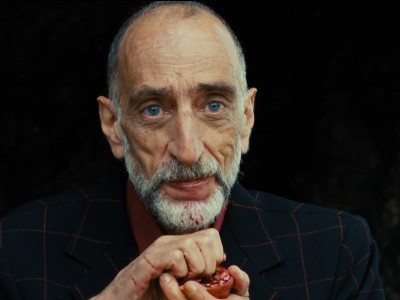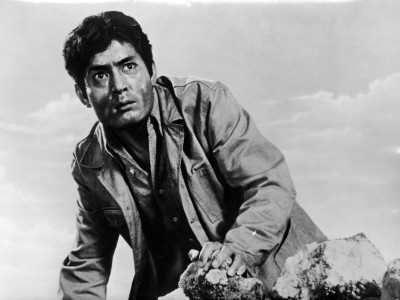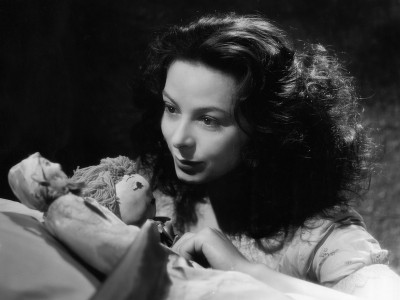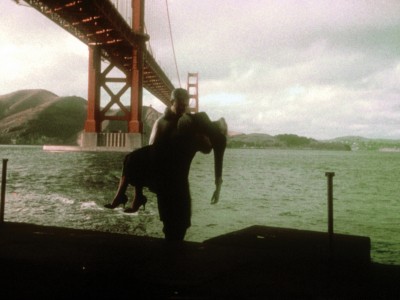
Miracle in Milan / Killer of Sheep
Screening on Film
-
Baby Be Good
Directed by Dave Fleischer and Myron Waldman.
US, 1935, 16mm, black & white, 8 min.
Print source: Harvard Film Archive
-
Miracle in Milan (Miracolo a Milano)
Directed by Vittorio De Sica.
With Francesco Golisano, Emma Gramatica, Paolo Stoppa.
Italy, 1951, 35mm, black & white, 96 min.
Italian with English subtitles.
Print source: Harvard Film Archive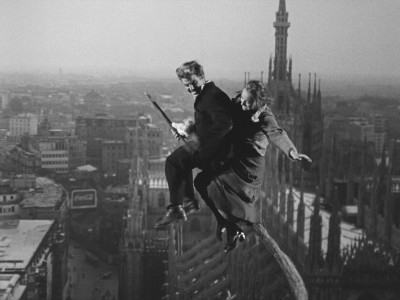
From the opening sequence, as water towers in the background loom over Lolotta’s cabbage patch, Miracle in Milan’s fairy tale structure appears incongruent against the encroaching capitalist world of modern Italy. When the holy fool Totò is denied a job by steelworkers immediately after his release from the orphanage, he follows a thief to a shantytown outside Milan which rests on magnate-owned property—revealing the absurdity of the system that marginalizes them. In Miracle, the seemingly unstoppable geyser of free-market greed is at odds with a divinely inspired working class resistance. The miraculous acts that keep the resistance alive, rendered with groundbreaking special effects, should catapult the beggars into further irrationality. However, it instead presents remarkably potent visions of hope, love and community, forcing us to ponder whether tenderness can truly exist in the throng of an individualistic society without some sort of… miracle.
-
Killer of Sheep
Directed by Charles Burnett.
With Henry G. Sanders, Kaycee Moore, Charles Bracy.
US, 1977, 35mm, black & white, 80 min.
Print source: Kino Lorber
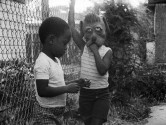
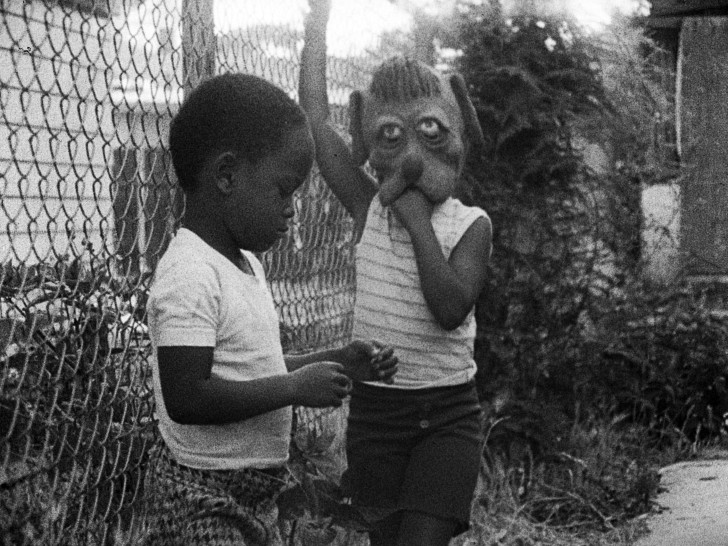
While studying film at UCLA under revolutionary documentarian Basil Wright, Charles Burnett became fascinated by the early documentaries of filmmakers such as Robert Flaherty and John Grierson. What was missing in their work and that of his more affluent classmates, however, was an understanding of marginalized communities from the inside. Produced for only ten-thousand dollars as Burnett’s thesis film, Killer of Sheep is a deeply poetic rumination on the hope and despair of working class Black families like Burnett’s own. Filmed in Watts, California almost a decade after the city’s race riots, the spectre of violence lurks behind each confrontation—even the imagined conflicts of children’s games. At the crossroads between the magical neorealism of Fellini and the gritty spirit of American independent landmarks like John Cassavetes’ Shadows, Killer of Sheep constantly eludes convention in pursuit of a truth rarely seen in cinema.
Part of film series
Screenings from this program
I Was Born, But… / Pixote
Where is the Friend’s House? / The 400 Blows