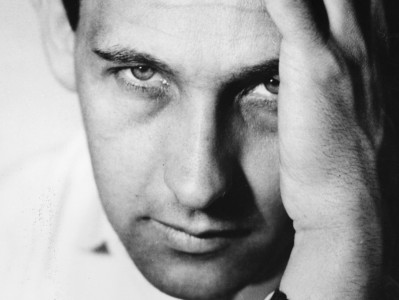
The Complete Stanley Kubrick
Stanley Kubrick (1928-1999) is not exactly a hidden talent waiting to be rediscovered by arthouse cinema insiders. Although he was sometimes criticized for self-indulgence or needless provocation, Kubrick had a profound influence on popular culture and other filmmakers. 2001: A Space Odyssey (1968) is frequently cited as among the greatest films made. But that is only one of several significant films that stretch across a long, if not especially prolific, career, from the postwar era of the early 1950s to the eve of the twenty-first century. Indeed, Kubrick was putting the finishing touches on Eyes Wide Shut (1999), when he died of a heart attack on March 7, 1999 at the age of seventy. If anything, his stature has grown in the quarter century since his death.
In The Complete Stanley Kubrick the HFA presents all thirteen of Kubrick's feature films, as well as his early documentaries, such as Day of the Fight (1951), and two additional feature-length films in which he was involved, One-Eyed Jacks (Brando 1961) and A.I. Artificial Intelligence (Spielberg 2001).
Raised in the Bronx, Kubrick was an indifferent student but gifted chess player and photographer. He was hired by Look magazine while still a teenager. In his earliest films, Fear and Desire (1952), Killer’s Kiss (1955), and The Killing (1956) one sees evidence of the careful composition and dramatic framing that would become part of his mature style, as well as his interest in existentialism and noir cinema of the time. But Kubrick was not just precocious; he was also ambitious. By the end of the decade, he and his production partner James B. Harris were already working with Kirk Douglas, who starred in Kubrick's Paths of Glory (1957) and subsequently hired Kubrick to take over direction for the massive production of Spartacus (1960). Douglas retained tight control of Spartacus, but Kubrick's career was definitively launched. Kubrick and Harris had cannily secured the rights to Vladimir Nabokov's infamous novel Lolita shortly before its American publication in 1958, and Warner Brothers was ready to offer Kubrick a deal. The film, a modest success starring James Mason, Shelley Winters, Peter Sellers, and a fourteen-year-old Sue Lyon, came out in 1962.
Dr. Strangelove or: How I Learned to Stop Worrying and Love the Bomb (1964) reunited Kubrick with Peter Sellers. A masterpiece of black humor and political satire, Dr. Strangelove also contemplates how nuclear annihilation could be brought about by a perilous reliance on autonomous technology, in this case an imagined "doomsday" device. The supercomputer HAL in 2001: A Space Odyssey, the futuristic world of A Clockwork Orange (1971) and the robot humanoids of A.I. Artificial Intelligence attest to Kubrick's wary fascination with technology. In his filmmaking, however, he was quick to adopt advances and spare no expense. Front projection and numerous special effects innovations were essential to filming 2001, and extremely fast camera lenses, originally made for NASA, enabled the low-light photography in Barry Lyndon (1975). The Shining (1980) would have been an entirely different cinematic experience without Kubrick's extensive use of the new Steadicam system.
Ahead of his time or not, Kubrick was older than most of his New Hollywood contemporaries. In the early 1960s, before the peak of his fame, he moved to England, far from the American scene, yet he remained deeply attuned to American culture, striking a chord with the younger generation of filmgoers in Dr. Strangelove and 2001, in particular. With The Shining, Kubrick aimed to enter the booming market of horror films (such as William Friedkin’s The Exorcist, which was a huge box office hit in 1973). Full Metal Jacket (1987) was a late entry into the wave of Vietnam films that included The Deer Hunter (Cimino 1978) and Apocalypse Now (Coppola 1979). Lolita, A Clockwork Orange and The Shining were all adaptations of widely-known books by Nabokov, Anthony Burgess, and Stephen King, respectively. Although Eyes Wide Shut was based on a novella by a lesser-known author (the interwar Viennese writer Arthur Schnitzler), Kubrick cannily hired the world's most famous film couple, Tom Cruise and Nicole Kidman, to play the lead roles.
In all his films Kubrick aimed for commercial success, but not at the expense of his own distinctive vision. His artistic control of the production process and commitment to visual precision set an enviable standard to this day for filmmakers to come. – Justin Weir
The HFA presents all thirteen of Kubrick's feature films, as well as his early documentaries, such as Day of the Fight (1951), and two additional feature-length films in which he was involved, One-Eyed Jacks (Brando 1961) and A.I. Artificial Intelligence (Spielberg 2001). The film series is offered in coordination with a Harvard undergraduate course taught by Professor Justin Weir, The Cinema of Stanley Kubrick, which considers Kubrick's films in the historical context of the Cold War and examines shifting cultural attitudes toward the representation of violence onscreen.
Past screenings from this program

Killer's Kiss

The Killing

Paths of Glory

Lolita

Spartacus - Restored Version

Dr. Strangelove or: How I Learned to Stop Worrying and Love the Bomb

Spartacus

2001: A Space Odyssey

Dr. Strangelove or: How I Learned to Stop Worrying and Love the Bomb
One-Eyed Jacks

A Clockwork Orange

Barry Lyndon

Barry Lyndon
The Shining

Full Metal Jacket

Eyes Wide Shut

A.I. Artificial Intelligence