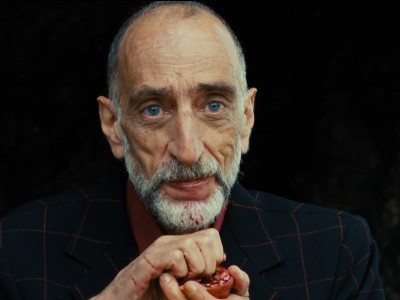
Where is the Friend’s House? / The 400 Blows
DCP / 35mm
-
Gee whiz-z-z-z-z-z-z
-
Where is the Friend’s House? (Khane-ye doust kodjast?)
Directed by Abbas Kiarostami.
With Babek Ahmed Poor, Ahmed Ahmed Poor, Khodabakhsh Defaei.
Iran, 1987, DCP, color, 83 min.
Persian with English subtitles.
DCP source: Janus Films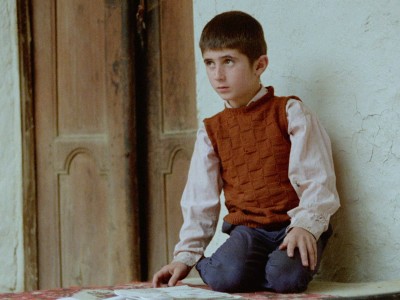
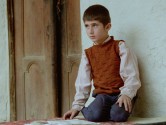
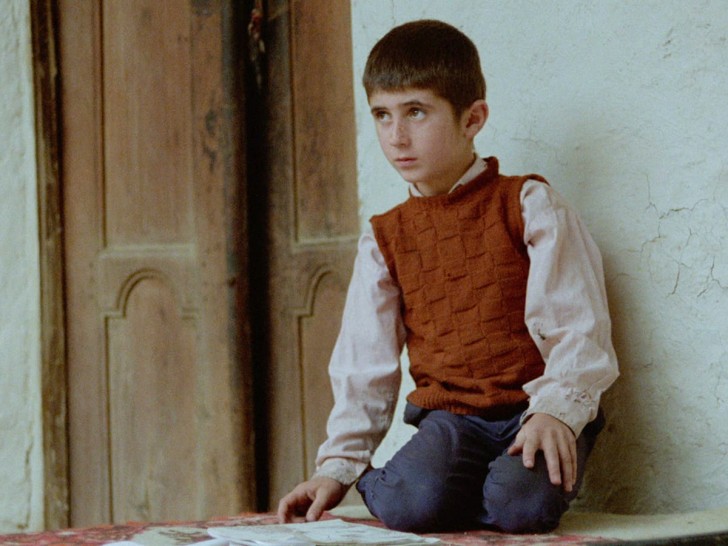
After accidentally taking his classmate’s notebook, the film’s protagonist Ahmad shows unyielding persistence to do the right thing, even when it doesn’t align with the demands of the adults in his life. His attempts to balance his roles as a student, son and grandson reveal how imposed obligations can easily pull us away from our fundamental instinct to be good to one another. The children of Where is the Friend’s House? seem to speak another language, one that cannot travel high enough to reach the grown-ups’ ears—Ahmad often has to repeat the same question multiple times to his mother before receiving an irrelevant response. His instinctual wisdom is deeply poetic, as is the film in its own austerity. Its bare plot, simple dialogue and lyrical visual motifs all gesture to an unspoken spirit that governs nature, humanity included. Kiarostami sees children as closest to understanding this spirit, perhaps because of their innocence. In a poem of his published twenty-five years after the film’s release, we see this fascination with the child’s inner world echoed: “In the spring wind / a school notebook’s pages turn over — / a child sleeping / on his little hands…”
-
The 400 Blows (Les 400 coups)
Directed by François Truffaut.
With Jean-Pierre Léaud, Albert Rémy, Claire Maurier.
France, 1959, 35mm, black & white, 99 min.
French with English subtitles.
Print source: Harvard Film Archive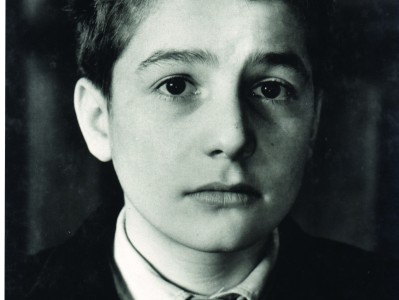
François Truffaut’s debut film shocked the world upon its premiere at Cannes in 1959, helping legitimize the French New Wave to an international audience. The character of Antoine Doinel, largely inspired by Truffaut’s own youth, is a rebel spurred by his passion for a kind of lived experience the adults in his life have rejected. To him, adulthood signifies a surrender of freedom, as he is subject to his parents’ unhappy relationship and a teacher flattened to the rules he blindly enforces. The adults may see him in a constant state of escape—but to Antoine, his youth is a pursuit of autonomy, and it is art that truly liberates him. He spends hours at the theater, knows Balzac by heart, and in a marvelous sequence involving a zoetrope-like carnival ride, the cinema is metaphorically pedestaled as the paragon of aesthetic bliss. In fact, it is only cinema that can grant wayward Antoine (and, thus, Truffaut) the freedom he seeks. In the film’s closing freeze frame, he stares down the camera’s barrel. His gaze immortalized, the boy is made a symbol of the New Wave’s undying spirit, one that has continued to inspire filmmakers for over half a century.
Part of film series
Screenings from this program
I Was Born, But… / Pixote
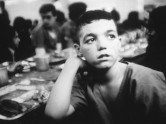
Where is the Friend’s House? / The 400 Blows