Extraordinary Stories
(Historias Extraordinarias)
With Mariano Llinás, Walter Jakob, Agustín Mendilaharzu.
Argentina, 2008, digital video, color, 245 min.
Spanish, English and German with English subtitles.
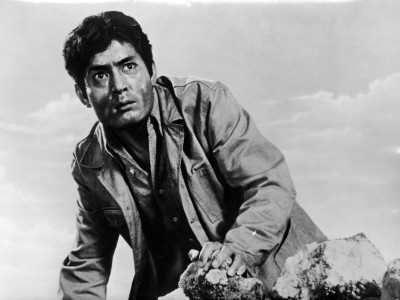
Historias Extraordinarias established itself as a groundbreaking film in contemporary Argentine cinema by tackling the standards of both the industry and the independent scene. The film made a daring proposition: cinema is an art that can still tell extraordinary stories as in the tradition of 19th-century writers like Robert Louis Stevenson and Lucio Victorio Mansilla.
What could appear at first to be a premise of legendary ambitions became, when facts were finally printed, a rupturist stand. In order to make a film of more than four hours, with thirty actors and over sixty locations, that includes a sequence set during the Second World War, exploding monoliths in Las Pampas and a generous amount of voiceover, an entire new system had to be created. Every professional producer would have rejected a project such as this, alleging its unfundable budget, its uncertain production schedule and its inexistent exploitation circuit. Thus, Historias Extraordinarias is a film made out of the impossible.
But it is not only the industry that has exposed its limitations; independent film production would also show little imagination to conceive of such a film. Any compromise against Llinás’ larger-than-life narrative ambitions would annihilate the heart and soul of Historias Extraordinarias. The independent circuit—too accustomed to minimalism, DIY pieces and stolen moments of bliss—could not figure Llinás’ greater expectations. Against the bureaucracy of the industry and the conformity of the independents, Llinás created a system of his own and produced, over five years, an exceptional film that most passionately breaks not a few of the rules of this game we call cinema.
With Llinás, we learn that in order to tell extraordinary stories you have to do it in an extra-ordinary way. In this epic detour, cinema had to find another economy, another dialectic between mise-en-scène and production and, furthermore, reconsider the dynamic between the art and its makers. In demolishing old and new production routines, Llinás called for a renewed praise in favor of amateurism, a philosophy in which the passion for the craft is so intense that the object merges with the lives of the artists involved. In this respect, Llinás could be considered a vanguardist filmmaker, as in the tradition of Orson Welles and Jean-Luc Godard. Historias Extraordinarias stepped onto the stage of Argentine cinema to crack its molded wooden floor. It pulled that theater down and built up new principles for other film practices to exist.
His subversive gesture is not pessimistic but merely creative. It is full of joy, with the pleasure of mastering, sharing and getting lost in the artifice of storytelling. Historias Extraordinarias confirms that cinema as a narrative discipline still has much to offer. It just needs not to fall into the hands of bureaucrats and festival snatchers, and resist among those who love, who would give their lives for another roll of dice in the realization of their art. – Matías Piñeiro
Part of film series

Screenings from this program
Extraordinary Stories

Balnearios

Extraordinary Stories
La Flor

La Flor
La Flor
Balnearios