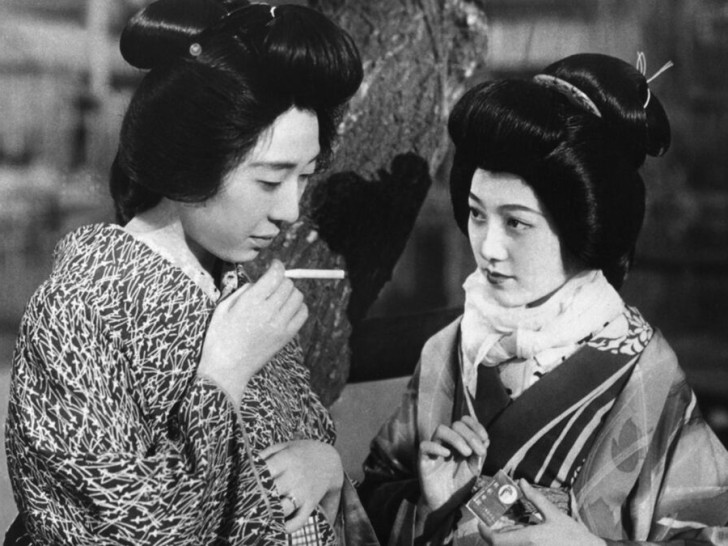
Apart From You
(Kimi to wakarete)
Screening on Film
$15 Special Event Tickets
With Yoshikawa Mitsuko, Isono Akio, Mizukubo Sumiko.
Japan, 1933, 35mm, black & white, silent, 72 min.
Japanese intertitles with English subtitles.
Print source: National Film Archive of Japan
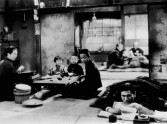
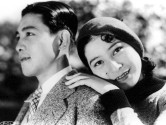
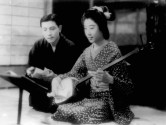
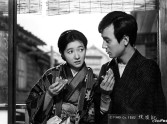
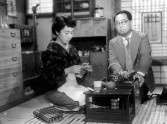
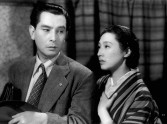
Compressing such topics as mother-son estrangement, juvenile delinquency, petty crime, violence, romantic heartbreak and poverty into one dense hour of silent melodrama, Naruse’s Apart From You offers an incisive portrait of lower-class struggle in urban Japan. Yoshio (Isono Akio) is a troubled teen ashamed of his geisha mother, Kikue (Yoshikawa Mitsuko), who endures the burden of her son’s erratic behavior silently but finds a supportive colleague in a younger geisha, Terugiku (Mizukubo Sumiko). When Yoshio develops a bond with Terugiku, the former begins to see the error of his ways, but this revelation does not come without significant compromise. Naruse’s style in this incident-rich tragicomedy is direct and uncompromising, his unfussy medium-shots revealing hidden depths of emotional severity. In a particularly wise detail, the director fixates on a rip in Yoshio’s sock as a microcosm of the deprivation and shame of poverty, an early example of a fetishistic image he would return to at other points in his oeuvre. – Carson Lund
PRECEDED BY
-
Flunky, Work Hard! (Koshiben ganbare)
Directed by Naruse Mikio.
With Yamaguchi Isamu, Naniwa Tomoko, Kato Seiichi.
Japan, 1931, 35mm, black & white, silent, 28 min.
Japanese intertitles with English subtitles.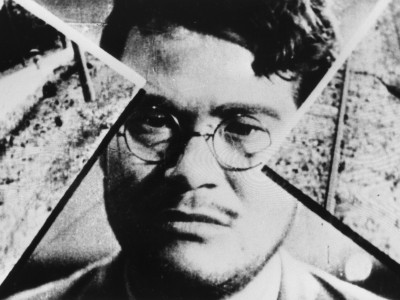
Naruse’s oldest surviving silent film covers a great deal of tonal and stylistic ground in its compressed twenty-eight minutes as it tells the story of Okabe (Yamaguchi Isamu), a desperate insurance salesman, and his lower-class family. The film’s first act concerns the playground antics of Okabe’s son Susumu (Kato Seiichi), a feisty rebel who gets into fights with his wealthier schoolmates, which compromises Okabe’s hopes of reaching potential clients. The sequences that ensue, in which the gregarious Okabe is trailed by a more restrained competitor, derive slapstick mayhem from economic desperation, but underneath the class commentary is a father-son parable that achieves a surprising pathos. When an accident leaves Susumu bedridden, Okabe and his wife (Naniwa Tomoko) must confront their unjust selfishness to reconnect with their son, a sweeping comeuppance that yields a swirl of surprising pictorial effects: rapid cuts, fanciful superimpositions and a kaleidoscopic, distorting use of mirrors. – Carson Lund
Part of film series
Screenings from this program

Sound of the Mountain
Anzukko
Mother
Sincerity
Summer Clouds
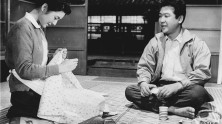
When a Woman Ascends the Stairs
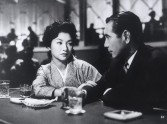
Summer Clouds
The Stranger within a Woman
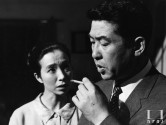
When a Woman Ascends the Stairs
Traveling Actors
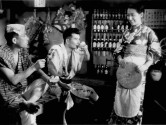
Scattered Clouds
Scattered Clouds
Flowing
A Wanderer’s Notebook
Repast
Every-Night Dreams

Apart From You
No Blood Relation
Street Without End
The Road I Travel with You / Avalanche
Every-Night Dreams