Funeral Parade of Roses
Land of Silence and Darkness
There will be a 15-minute intermission between films. Land of Silence and Darkness will begin around 4pm.
PROGRAM
-
Funeral Parade of Roses (Bara no soretsu)
Directed by Matsumoto Toshio.
With Pita, Ogasawara Osamu, Tsuchiya Yoshio.
Japan, 1969, 35mm, black & white, 105 min.
Japanese with English subtitles.
Print source: Harvard Film Archive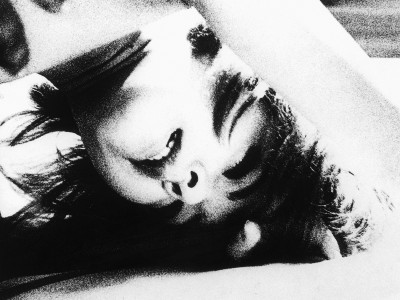
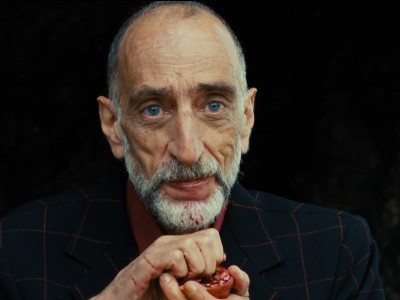
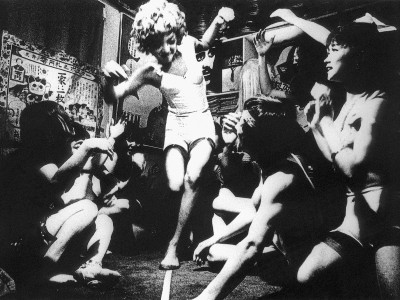
In his queer New Wave masterpiece, Matsumoto Toshio treats the screen as a canvas for both chaos and liberation, capturing the intoxicating nihilism of 1960s counterculture by treating nothing as sacred, mixing styles, genres and tones until the film and our own sense of reality feel thoroughly alienated. “I am a wound and a sword, a victim and an executioner,” declares Eddie, a mesmerizing transgender woman whose presence both anchors and complicates a world where characters and actors slip between roles that bleed into one another. When is someone speaking as themselves? Is there even a stable “self” to speak from? Are any of us ever authentic, or are we always performing?
The film collides documentary realism with avant-garde theater, dissolving boundaries to resurrect Oedipus Rex within the smoky, subterranean drag bars of Shinjuku. Within this instability, the audience finds a strange freedom: power dynamics are reversed, identity unspools without apology, its contradictions exposed rather than resolved, and the boundaries between stage and reality falling apart. – Jacqueline Metzger ‘27
-
Land of Silence and Darkness (Land des Schweigens und der Dunkelheit)
Directed by Werner Herzog.
West Germany, 1971, DCP, color, 85 min.
Germany with English subtitles.
DCP source: American Genre Film Archive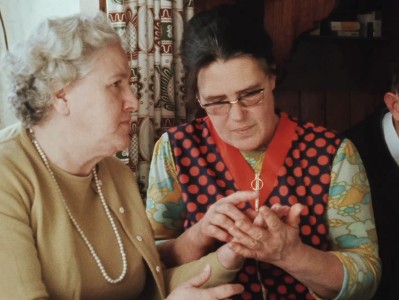
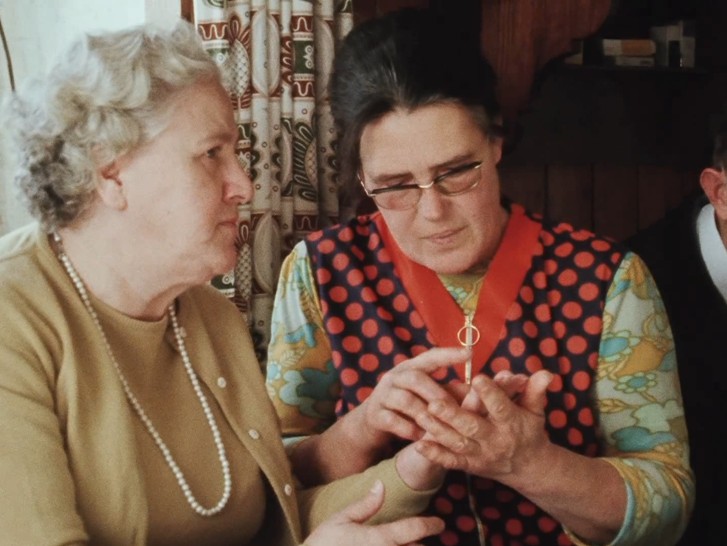
Herzog’s first feature and one of his purest, most self-defining works revolves loosely around Fini Straubinger, a woman who lost sight and hearing as a teenager and spent decades confined to bed before becoming an advocate for deaf-blind people. Herzog follows Fini as she visits institutions, private homes and schools, observing the miraculous circuitry of touch and trust that grants her deaf-blind companions varying degrees of relief from an otherwise isolated, self-contained existence. Shot on 16mm, the film’s soft grain draws out the texture in human hands, the hair of a chimpanzee, the bark of a tree. The handheld camera privileges proximity, lingering on faces and hands, and the film is dense with long, unbroken shots. Sparse music accompaniment leaves room for a rich ambient soundscape. Together, these choices produce a haptic way of seeing through a disorienting, slow-onset synesthesia—rendering otherwise invisible forms of perception and care legible. – Maxwell Suprenant ‘26
Part of film series
Screenings from this program

Funeral Parade of Roses / Land of Silence and Darkness