A Hot Roof
(Gyae-got-un nalui ohu)
With Ha Yu-mi, Jung Sun-kyung, Son Sook.
South Korea, 1995, 35mm, color, 110 min.
Korean with English subtitles.
Print source: Korean Film Archive
In South Korea, the term apʻatŭ—derived from the English “apartment”—designates a high-density, vertical residential building which may include both owned and rented units, and is also a site of both intense communal bonding and friction. Ever since its popularization in the 1970s with the dramatic urbanization of Seoul, the apʻatŭ has functioned as a microcosm of the nation’s social politics and has even become a central character in Korean cinema, most famously in Bong Joon-ho’s Barking Dogs Never Bite (2000).
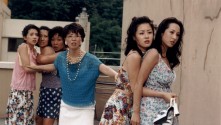
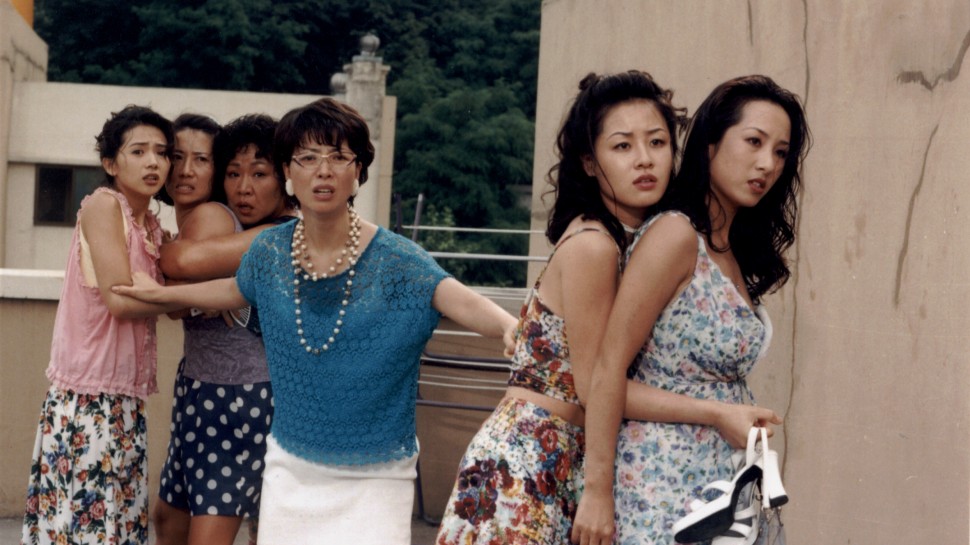
A Hot Roof is another vital, pioneering work in this lineage. Merging the unique spatial dynamics of apʻatŭ life with a sharp feminist perspective, the film challenges the patriarchy that has long dominated Korea, turning the building's roof into a stage for solidarity and resistance. The story of housewives uniting against domestic violence embeds its critique in the architecture itself. The apartment complex, with its labyrinthine structure of multiple corridors and gateways, becomes a template for refusing any homogenous narrative of resistance. Rather than staging a singular, solemn protest, the film utilizes the apʻatŭ as a site of chaotic comedy and misalignment, subverting the totalizing scale of patriarchal violence that extends from the home to the entire society.
Part of film series
Screenings from this program
Life Line

The Last Witness

Decision to Leave