Kino-Pravda No. 21 / Battleship Potemkin / Stride, Soviet!
Screening on Film
$10 Special Event Tickets
-
Kino-Pravda No. 21 (Lenin Kino-Pravda)
Directed by Dziga Vertov.
USSR, 1925, 35mm, black & white, silent, 29 min.
18 fps
Russian intertitles with English subtitles.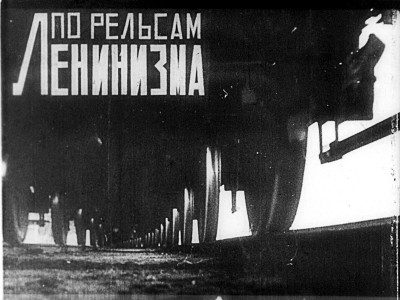
Lenin Kino-Pravda is a special, longer-than-usual issue of Kino-Pravda in which Vertov jumps with boldness and ease between newsreel and drawn animation to illustrate Soviet Russia's way up under Lenin's leadership, the decline in Lenin's health, and the year elapsed since his death. One notable sequence representing Lenin's illness can be seen as a tour de force of Vertov and Alexander Rodchenko's animated titling. In another, an animated caricature shows the face of a capitalist changing from gloating to despair – as he sees more and more people, crowds of them, join the Communist Party after Lenin's death.
-
Battleship Potemkin (Bronenosets Potyomkin)
Directed by Sergei M. Eisenstein.
With Vladimir Barsky, Grigori Alexandrov.
USSR, 1925, 35mm, black & white, silent, 75 min.
18 fps
Russian intertitles with English subtitles.
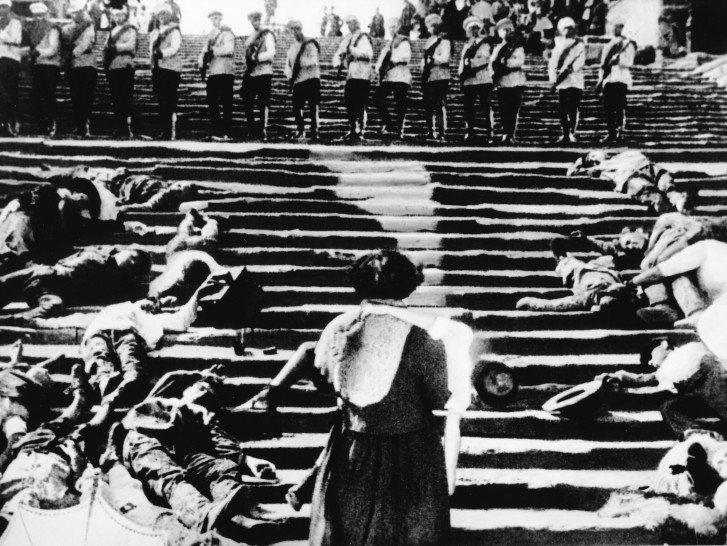
In rendering his account of the 1905 Black Sea mutiny and the sympathetic response it received from the people of Odessa, Eisenstein makes brilliant use of montage – the juxtaposition of individual shots – to provide drama by altering space and time to create striking metaphoric relationships that bolster his political arguments. The film's formal beauty is balanced by the stark power and humanity of its realist depiction of the suppression of an outraged populace.
"One of the immortal classics of world cinema." – Richard Peña
-
Stride, Soviet! (Shagai, Sovet!)
Directed by Dziga Vertov.
USSR, 1926, 35mm, black & white, silent, 65 min.
20 fps
Russian intertitles with English subtitles.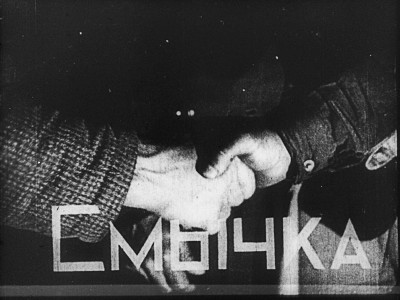
What began as a commission by the sitting Moscow Soviet for a promotional movie, one which would show all the good things the Soviet had done for its city, was transformed by Vertov into something else entirely: a film experiment, an emotional film – anything but a picture that would help the Mossovet be reelected. In the end, the Mossovet refused to recognize Stride, Soviet!, and it was largely boycotted by film theaters. One can imagine the distress authorities must have felt when they saw what had been made of their election rally. No people are seen, just buses, cars, and various other vehicles gathered in the square to listen to the loudspeaker: one mechanical device talking to other mechanical devices about weapons and tools.
Part of film series

Screenings from this program
Kino-Eye / Strike

Kino-Pravda No. 21 / Battleship Potemkin / Stride, Soviet!

A Sixth Part of the World / Bed and Sofa

Miss Mend

The Eleventh Year / Zvenigora
The House on Trubnaya Square / Man With a Movie Camera / In Spring