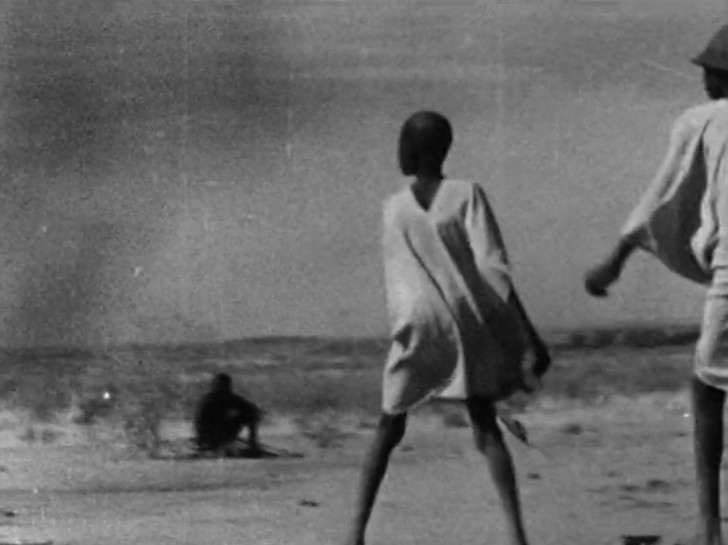
A Terra! The Cinema of Marta Mateus
Program IV
Screening on Film
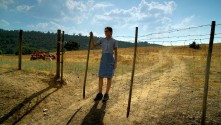
Moving backward to the early days of cinema, we start from more distant beginnings: from when stars, birds, trees, winds, seeds, mountains and magicians shared the same language and dialogue with the same alphabet of life; from life at its origins. Life is wise—always announcing, acting, speaking, revealing things we don't know, things we have forgotten. When ignoring the hidden causes behind the “chance” events in life, one might call them mere coincidence, or if with fatalistic mysticism, a blessing or a malediction. What power do human laws have over the laws of nature and the universe? In these three films, trade and speculation among ourselves—and the unknown forces in our lives—only go so far. Each film dramatizes the intervention of contrasting laws in the course of the characters' destinies. The program gradually explores different formal styles and tones—conjuring senses of the real and ways of organizing the process of reality through fiction. — Marta Mateus
Please note: Weird Woman is a substitution for the originally programmed short What Do You Think?: Tupapaoo (1938) by Jacques Tourneur, since it was unfortunately impossible to find a good quality exhibition print.
PROGRAM
-
Weird Woman
Directed by Reginald Le Borg.
With Lon Chaney Jr., Anne Gwynne, Evelyn Ankers.
US, 1944, 16mm, black & white, 63 min.
Print source: HFA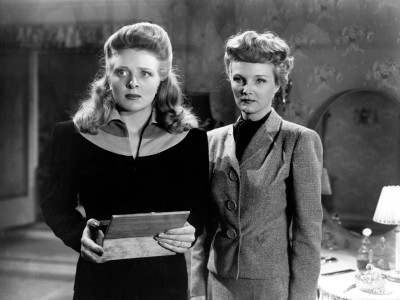
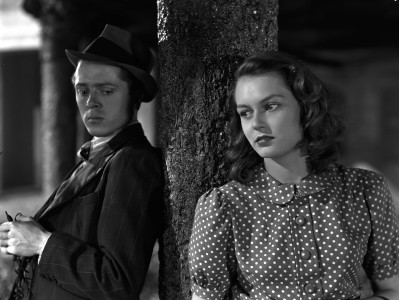
The long-running radio serial Inner Sanctum Mystery (1941 – 1952) inspired six Universal films, all starring Lon Chaney Jr. and featuring eerie stories of supernatural terror. In the best one, Weird Woman, Chaney is Norman Reed, an anthropology professor married to the exotic island native he met while conducting field research for a book on voodoo religions. Austrian émigré Reginald Le Borg lends an ironically anthropological eye to his cutting study of a small-minded American town destabilized by the incestuous rivalries and unspoken xenophobia that ignite when Reed unexpectedly returns from his expedition with his comely bride in tow. Remaining true to its radio origins, Weird Woman makes effective use of voiceovers to place the viewer squarely in the troubled mindset of Reed as he struggles to understand the many weird women who whisper suggestively into his ear, including the always uncanny Val Lewton regular Elizabeth Russell as a wrathfully vengeful wife desperate to blame someone for her husband’s suicide. – Haden Guest
-
Les magiciens de Wanzerbé
Directed by Jean Rouch.
France, 1948, 16mm, color and b&w, 38 min.
French with English subtitles.
Print source: Centre National du cinéma et de l’image animée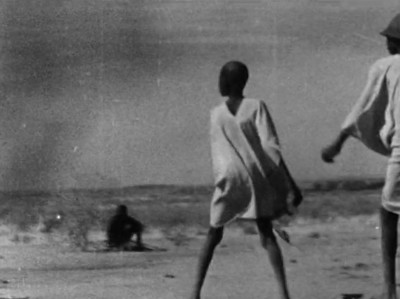
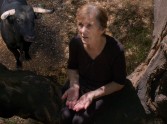
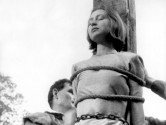
Rarely seen and one of the most alluring of Jean Rouch's films, Les magiciens de Wanzerbé records the sages of the title performing rituals that invoke nature's divine entities to request protection and sustenance for the village. They observe, feel and wait with an attitude of devotion and humility before the immense magnificence of the elements, with which they collaborate. They have preserved the wisdom of mediators between heaven and earth, energies they ally in themselves, in a permanent exchange with nature. Exchanges are also made with other villagers for pottery or salt—reading the path of water or love's fate—disregarding the use of money. Youngsters playfully interact through games while preparing for the elders' teachings. The community celebrates nature, the fertility of being with others under the same sun. "The camera here has only served as a pencil to record what the hand couldn't register,” the filmmaker warns at the beginning. The film camera serves as a medium of possession for the anthropologist, enabling the transmission of the wisdom and experiences shared by the Sohance people. — Marta Mateus
Restoration CNC © CNRS - CFE.
Special thanks: Laura Moncet—Centre national de la recherche scientifique; and the Comité du Film Ethnographique.
-
A Corner in Wheat
Directed by D.W. Griffith.
With Frank Powell, Grace Henderson, James Kirkwood.
US, 1909, 16mm, black & white, silent, 14 min.
Print source: HFA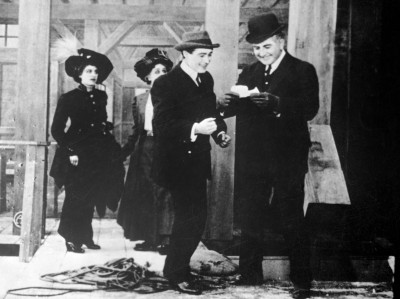
The seeds of wheat slip from the peasant's hands—the hands of labor, the hands that sow the seeds on the land that grows them. A Corner in Wheat traces disparate chains of value through three intertwined perspectives: of those who cultivate the fields, those who consume the bread, and those who control the markets. Seizing control of the whole world’s wheat, a greedy magnate doubles the price of bread at the bakery, taking it from the hands of the poor. After a lavish party to celebrate his wealth, he proudly shows off the grain elevators to his guests and ends up slipping into the pit. D. W. Griffith crafts a gravitational space-time where physical and moral forces converge within a single cinematic dimension. — Marta Mateus
Part of film series
Screenings from this program


Program IV


Fire of Wind