The Flowers of St. Francis
Network
There will be a 15-minute intermission between films. Network will begin around 3:45pm.
PROGRAM
-
The Flowers of St. Francis (Francesco, giullare di Dio)
Directed by Roberto Rossellini.
With Brother Nazario Gerardi, Brother Severino Pisacane, Esposito Bonaventura.
Italy, 1950, 35mm, black & white, 87 min.
Italian with English subtitles.
Print source: Janus Films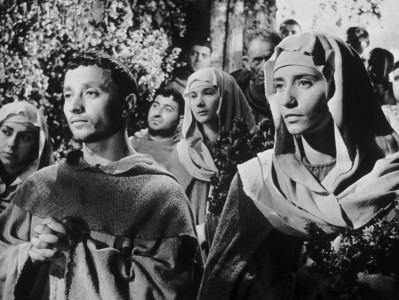
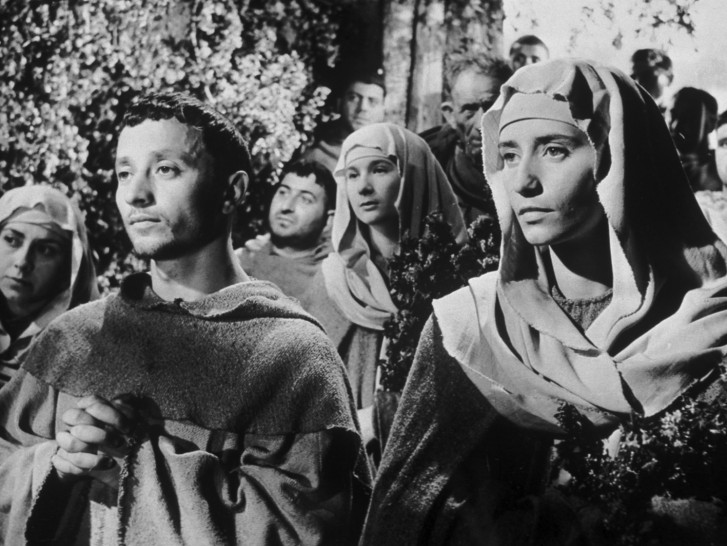
“I talk and talk, yet accomplish little,” proclaims the seemingly foolish but incredibly sympathetic Brother Ginepro in Rossellini’s inspirational postwar film. Perhaps better characterized by its Italian title, Francesco, giullare di Dio (Francis, God’s Jester), this collection of nine tender vignettes follows a brotherhood of monks who orbit around St. Francis of Assisi in the hopes of grasping the essence of his Catholic steadfastness. In an otherwise cruel world, the friars seek to live out with unflinching devotion Francesco’s teachings of radical humility and self-sacrifice, doing so comically and to the point of peril. Shot in the visually charming Italian countryside and cast with real monks from the Nocera Inferiore Monastery, Rossellini’s fifth film awakens a profound compassion for the innocent, expressing the power of the pure of heart to shape this world, not necessarily through words or actions, but complete and unwavering—if naïve—love for all living things. – Julia Dan ‘26
-
Network
Directed by Sidney Lumet.
With Faye Dunaway, William Holden, Peter Finch.
US, 1976, 35mm, color, 121 min.
Print source: Harvard Film Archive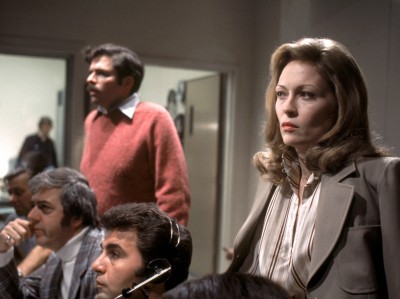
Writing the screenplay for Network amidst the Watergate scandal and the Vietnam War’s countercultural fervor, Paddy Chayefsky realized that anger, not joy, fuels American media. This fury propels the narrative, as recently-fired anchorman Howard Beale (Peter Finch) announces on TV that he will commit suicide live in a week. Despite his outburst, a ratings spike convinces the network to continue airing Beale. In the absence of institutional trust, media is the new gospel, and Beale is the messiah of the airwaves. The irony is that corporate interests govern Finch’s rousing speeches: we watch the network’s attempts, led by programming chief Diana Christensen (Faye Dunaway), to capitalize on American rage for profit. Guided by a sharp, quotable script, the film is full of stunning extended monologues. As Sidney Lumet draws out an intense physicality from Finch—eyes wide, arms extended, hands twitching—you cannot help but feel swayed by his compelling ideology. – Connor Kim ‘27
Part of film series
Screenings from this program
Funeral Parade of Roses / Land of Silence and Darkness