Angels on the Streets
Spring of Korean Peninsula
Discovered in the China Film Archive in 2004, these films, among the earliest surviving from the Korean Colonial Era, shed a fascinating new light on the workings of the Korean film industry during the tumultuous thirty-five year period Korea spent under Japanese rule. Because filmmakers during the colonial period were often trained in Japan and worked with Japanese crews, the resulting films combine a complex mingling of Korean and Japanese influences while dealing obliquely with issues of colonialism, imperialism and modernity that problematize the very notion of a national cinema.
The Harvard Film Archive is proud to share the exciting discovery of these two films with a new generation of filmgoers. The Korea Institute’s Korean Cinémathèque will present other films from the colonial era. For the schedule, please visit the Korea Institute website.
PROGRAM
-
Angels on the Streets (Chib-eobneun cheonsa)
Directed by Choi In-kyu.
With Moon Yae-bong, Kim Shin-jae, Kim Il-hae.
Korea, 1941, 35mm, black & white, 73 min.
Korean with English subtitles.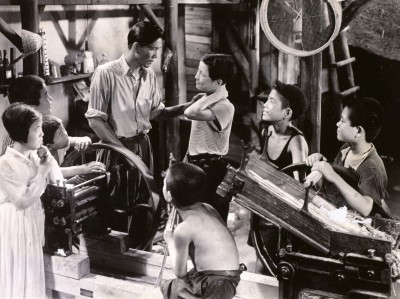
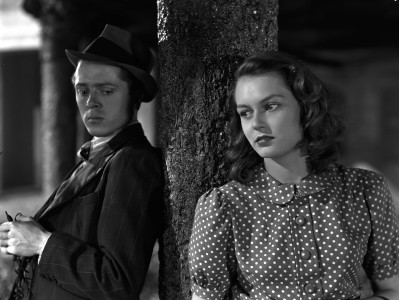
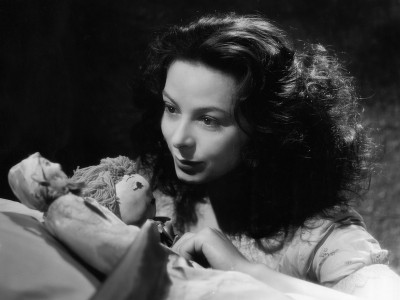
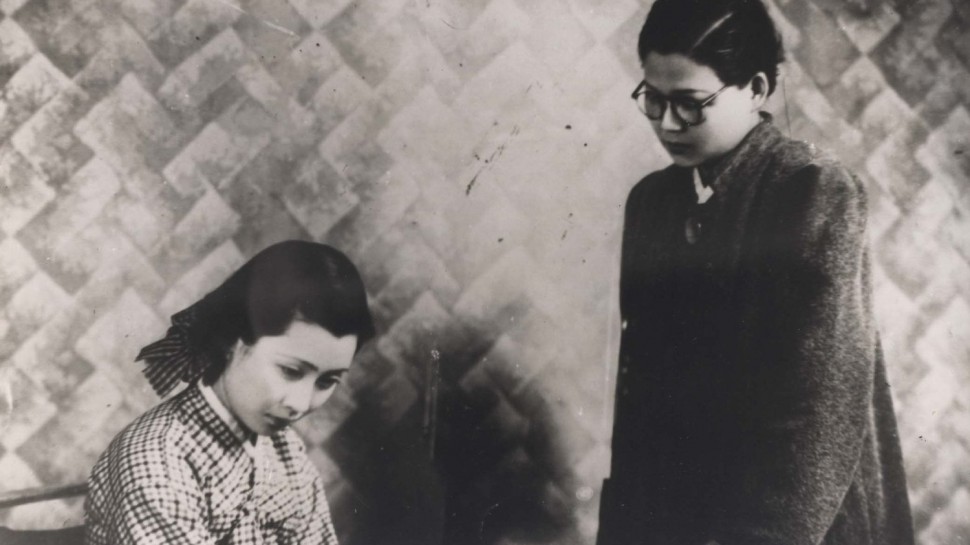
Starring two of the most celebrated actresses of the era as a pair of orphans living on the Seoul streets, Angels deftly avoids the pitfalls of the stereotypical propaganda film by skillfully combining the technical and expressive devices of classical Hollywood cinema with an almost neorealist approach to its subject. By portraying the resolutely day-to-day world of a foster home for orphans, Choi masterfully balances the necessary endorsement of the official colonial policy of privately sponsored welfare with his implicit critique of the state through his sensitive depiction of the abandoned colonial children.
-
Spring of Korean Peninsula (Bando-ui bom)
Directed by Lee Byeong-il.
With Kim So-young, Seo Wol-young, Baek Ran.
Korea, 1941, 35mm, black & white, 84 min.
Korean with English subtitles.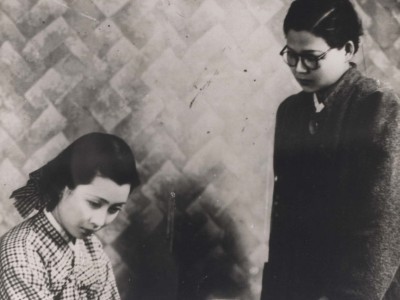
The film debut of Lee Byeong-il, later known as the father of Korean comedy, Spring tells the bittersweet story of a fragile backstage romance set within Korea’s film and recording industries. While filming an adaptation of The Story of Chunhyang – Korea’s Romeo and Juliet – Lee Young-il and Heo Hoon run out of funds and turn in desperation to embezzlement. An astute reflection on the Korean films industry’s financially fraught transition from the silent to sound era, Spring of Korean Peninsula is also a world-weary look at filmmaking that anticipates The Bad and the Beautiful.