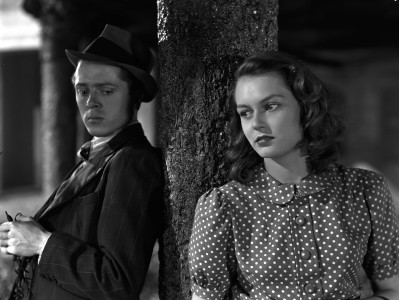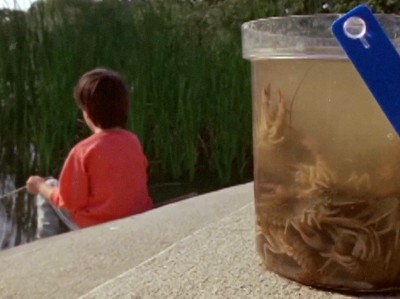
The House on Trubnaya Square / Man With a Movie Camera / In Spring
Screening on Film
$10 Special Event Tickets
-
The House on Trubnaya Square (Dom na Trubnoi)
Directed by Boris Barnet.
With Vera Maretskaya, Vladimir Fogel.
USSR, 1928, 35mm, black & white, silent, 75 min.
20 fps
Russian intertitles with English subtitles.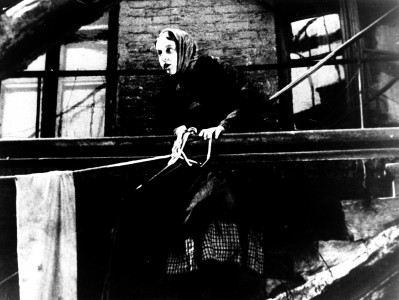
A spunky country girl lands a job as a servant in Moscow and gets her first taste of the middle classes when she becomes entangled in the lives of the residents of an entire block of flats. An observant, essentially loving character sketch of a community that never seems to stop to catch its breath, The House on Trubnaya Square mixes perceptive satire (including some well-placed anti-bureaucratic barbs) with cinematic surprises (from surrealism to stop-motion) and burlesques of other Soviet stylists (Eisenstein and his crowds, Vertov and his tramcars). Adapted from Pacific Film Archive program notes.
-
Man with a Movie Camera (Chelovek S Kinoapparatom)
Directed by Dziga Vertov.
USSR, 1929, 35mm, black & white, silent, 65 min.
24 fps
Russian intertitles with English subtitles.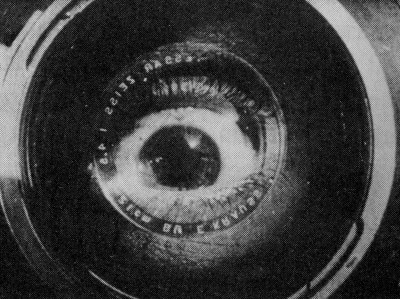
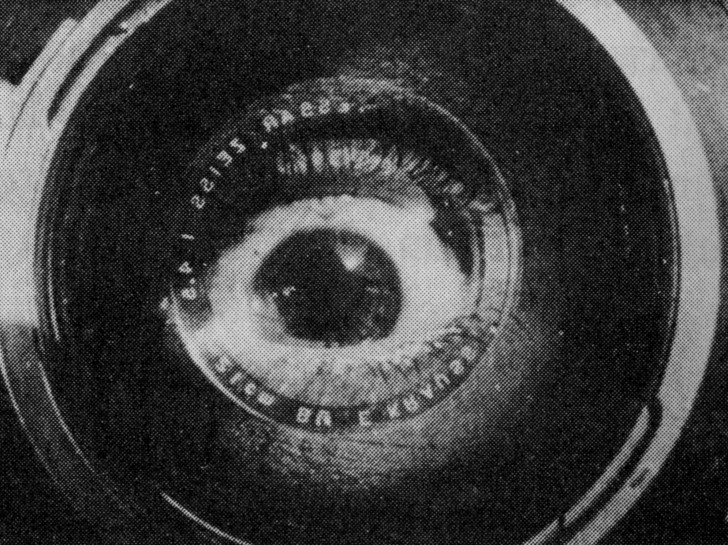
Man with a Movie Camera is a film about film production, unique for the ways it lays bare the process of its own creation – from the cameraman and the editor to the projectionist and the orchestra involved with the exhibition of the film we see being made. This self-reflexivity is consistent both with the principle of Constructivist transparency and with the Productionist doctrine, in which the work itself – not its end results – will become the aesthetic value. The future belongs to the art of work, not to works of art.
-
In Spring (Vesnoy)
Directed by Michail Kaufman.
USSR, 1929, 35mm, black & white, silent, 71 min.
Russian intertitles with English subtitles.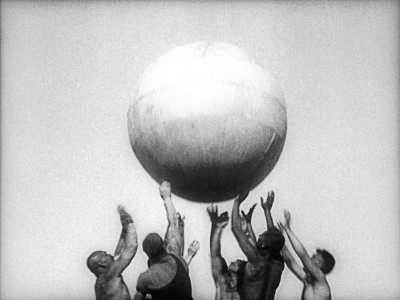
Brothers Michail Kaufman and Dziga Vertov became alienated from one another during post-production for Man with the Movie Camera (for which Kaufman worked as cameraman). Kaufman's own film essay, made the same year, was praised by Joris Ivens as a combination of "the acid rigorousness of Vertov with the humanistic approach of Cavalcanti."
Part of film series

Screenings from this program
Kino-Eye / Strike

Kino-Pravda No. 21 / Battleship Potemkin / Stride, Soviet!

A Sixth Part of the World / Bed and Sofa

Miss Mend

The Eleventh Year / Zvenigora
The House on Trubnaya Square / Man With a Movie Camera / In Spring