


Once There Was History ... Andrzej Wajda at 100
Rare are filmmakers whose oeuvre stands for the triumphs and tribulations of their entire national cinema—or indeed their nation. Andrzej Wajda was one of these scarce dignitaries, sketching for over six decades not only a complex and prolific aesthetic profile, but a model of what Polish cinema could, should and might still look like. Born in 1926 to a schoolteacher and a military aide-de-camp, Wajda grew up in a home abundant with literature (through his mother, a voracious reader of historical fiction) and fine art (through his father, an amateur painter). Andrzej himself would go on to train in oil painting and sculpture before being interrupted at age sixteen by war. He enlisted as a courier in the anti-fascist—but also anti-communist—Home Army, his father having been executed by the Soviet NKVD in 1940.
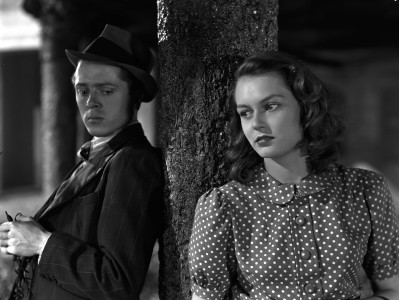
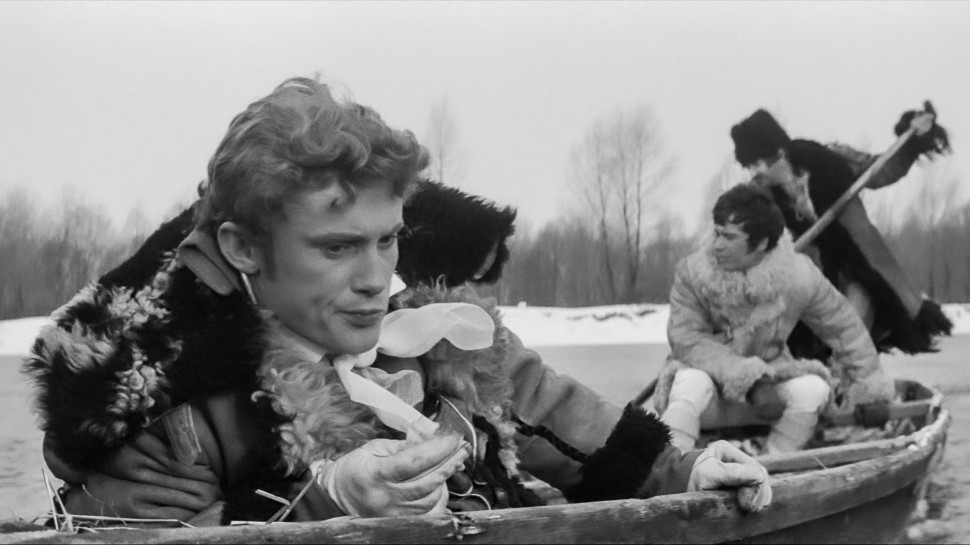
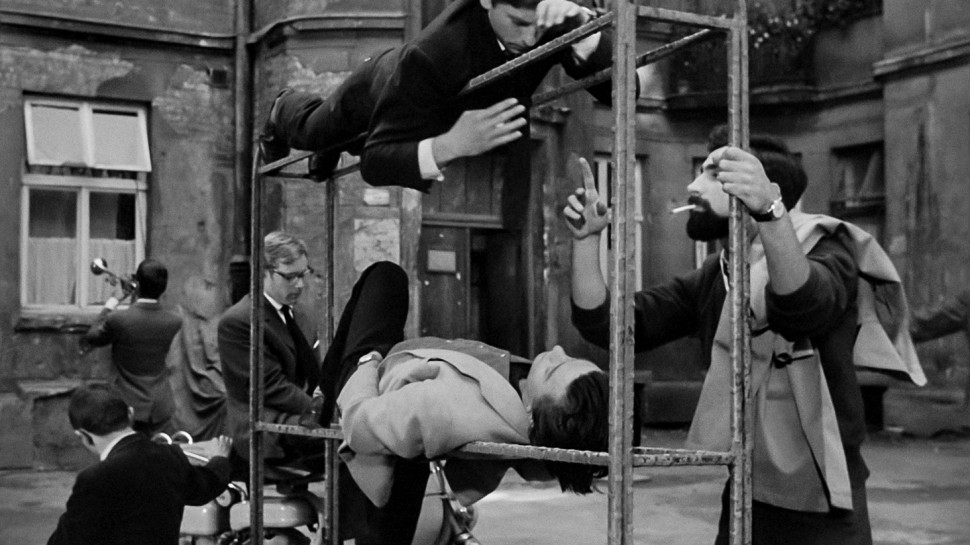
If Wajda’s opus maps precisely onto the artist’s lived history (and thereby also, in large part, to the modern history of his country), it does so consciously and avowedly, with total awareness of the project’s stakes. First came World War II resistance movements, thematized and worked through in the director’s early trilogy (1955-58), the entirety of which will play in this series. After A Generation, Kanał and Ashes and Diamonds, Wajda embarked on four simultaneous productions, only one of which properly entered the film-historical canon. Innocent Sorcerers, shot before Godard’s Breathless but released months after, is Wajda’s closest approximation of Nouvelle Vague experimentalism and an eye-opening glimmer of Warsaw in times of thaw and transformation. From Władysław Reymont and Adam Mickiewicz to Dostoyevsky, literature was an unfailing source of inspiration; well over half of Wajda’s films are adaptations, with The Ashes standing as the most lavish entry in this group. Period dramas and costume spectacles are another important throughline, The Promised Land being a fine example of Wajda’s investment in visualizing history through elaborate mise en scène and camerawork.
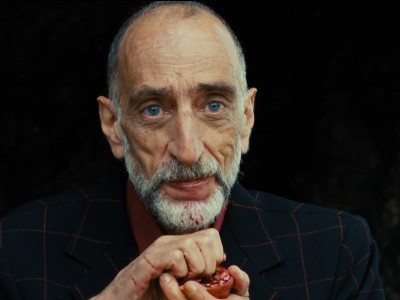
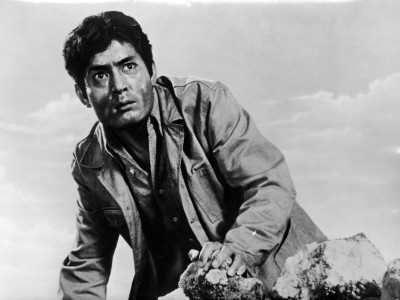
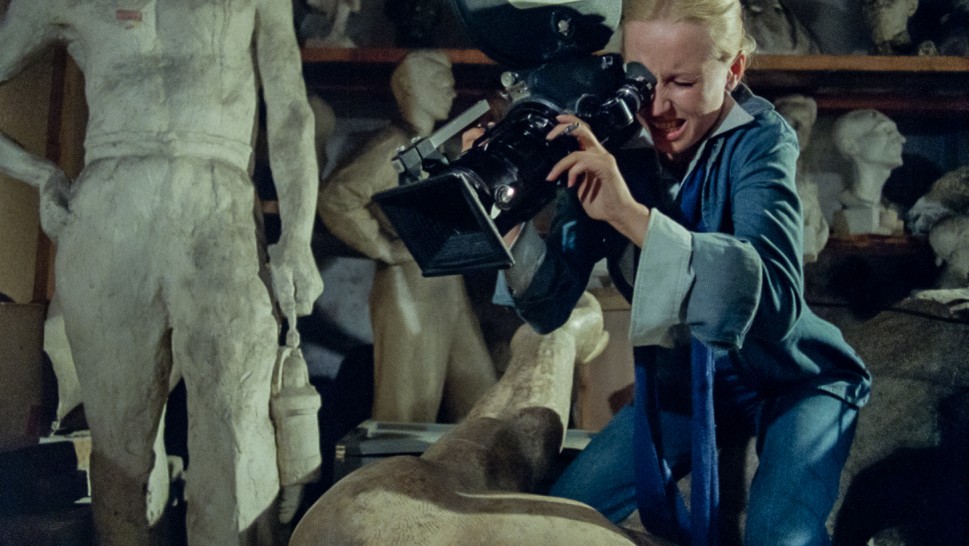
The 1970s saw a flowering in Wajda’s artistry, as well as in new Polish film (and art) more generally. Emboldened by political liberalization and struggles for workers’ rights, the director’s films of this era evince a bite and ethical clarity unseen in earlier, less assertive work. Without Anesthesia and The Conductor are only two edgy examples of what is often labeled the “cinema of moral concern,” of which Wajda was a central progenitor alongside Krzysztof Zanussi, Krzysztof Kieślowski and Agnieszka Holland. Yet it is in the diptych Man of Marble and Man of Iron—followed years later by the informal epilogue Wałęsa: Man of Hope—that the critique of (post-)Stalinist repression stings the most. Protests, strikes and critiques were too much for authorities to bear, leading to the imposition of martial law (1981-1983), during and after which Wajda remained active in France, Germany and Japan, in filmmaking as well as stage productions. (Throughout the years, theater was Wajda’s parallel creative outlet, just as Japan was his second cultural legacy of interest. The filmmaker and his wife Krystyna Zachwatowicz were instrumental in establishing the Manggha Museum of Japanese Art and Technology in Kraków in 1994.) After the collapse of state socialism, Wajda in the 1990s—like much of Polish and Eastern European cinema— turned to heritage, assembling a romantic genealogy of his land with the aristocratic tragicomedy Pan Tadeusz.
An aesthete, a national artist and a dissident all at once, Wajda was nothing if not a productive paradox. Enlisted to adapt Poland’s founding literary texts but turning in ambiguous, skeptical work casting doubt on the country’s mythologies, he operated as a nation-builder that never ceased to question and probe what it even means to be a (heterogeneous, imperfect, always contradictory) people. A state-builder that dissented from official narratives, he was also an indispensable builder of community, a magnet that absorbed talent into his orbit and around which new formations of artists and cultural workers coalesced. In 1972, he co-founded Film Unit X: a production cooperative that enabled and shepherded into existence not only all of Wajda’s pathbreaking ’70s work, but also that of Andrzej Żuławski, Feliks Falk, the documentarian Marcel Łoziński and countless others.
In criticism and scholarship, Wajda is often discussed as a historian who activated moving images in the service of excavating and (re)constructing complex stories of a nation. Yet this series—staged on the centennial of Wajda’s birth, showing a cross-section of influential work from six decades and every chapter of his career—illustrates that he is a historian of a particular type: at home in the 18th century just as much as in the present, among rebelling workers as well as in the aristocracy. “Once there was history, but not any more,” wrote Guy Debord (referencing Karl Marx) on the usurpation of history by ruling classes as an instrument of hierarchy and domination. In class society, argues Debord, participating in historical movement is a privilege reserved for the elite. Wajda counters this injustice in every film by treating history over and again as a public and ever-evolving process, available for all to interpret, study and find their respective places within. At the same time, the director remains aware of Fredric Jameson’s maxim that history bears scars of exploitation and economic violence: “history is what hurts.” Filming history as an inclusive popular project (without ever lapsing into nationalism) and as a process subject to change and different readings (without engaging in revisionism)—these are qualities that distinguish Wajda as a historical filmmaker of the highest order, and as a figure from whom we in today’s anti-historical times can learn from. – Nace Zavrl
Screenings of Andrzej Wajda’s films in the USA in 2026 are part of the Wajda 100 Tour – North America project, organized by DI Factory with the financial support of the Polish Film Institute.
Upcoming screenings from this program

Innocent Sorcerers
Kanał

The Promised Land

Man of Marble

Wałęsa: Man of Hope
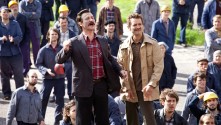
Man of Iron

The Conductor

Without Anesthesia, aka Rough Treatment


Pan Tadeusz, aka The Last Days

Ashes and Diamonds